Choosing A High-Power Laser Shutter For Pulsed Applications
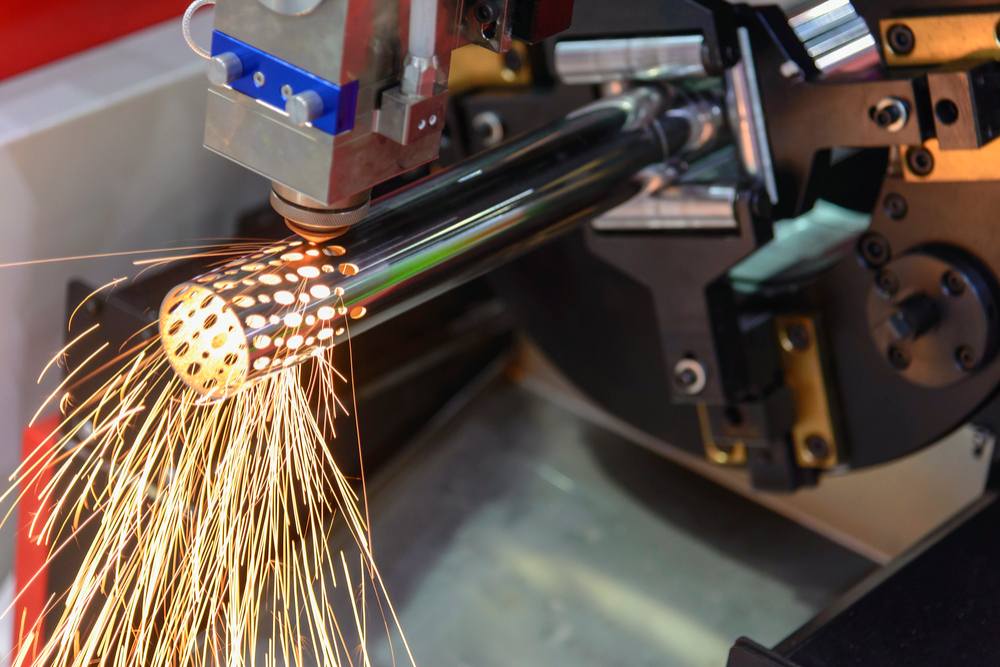
Selecting a high-power laser shutter for pulsed applications requires more than matching a few specifications on a datasheet. Pulsed laser systems behave differently from continuous-wave platforms, placing distinct requirements on beam control, thermal resistance, and timing accuracy.
Short bursts of intense energy introduce risks of optical damage, misalignment, and unintended exposure, making shutter selection a critical design decision.
Pulsed laser environments leave little room for error. Shutters must react quickly, survive repeated exposure to extreme energy density, and maintain stable performance across millions of cycles. Understanding how pulsed lasers operate in real systems can help frame what matters most when selecting a shutter.
High-Power Laser Shutter for Pulsed Applications
A pulsed laser delivers energy in short, high-intensity bursts rather than a steady output. Pulse energies often range from a few joules to well beyond ten joules per square centimeter, depending on the application. Its energy is concentrated on shutter components within milliseconds, which places stress on materials, coatings, and actuation mechanisms.
Designing for these conditions means accounting for repeated thermal loading without warping, coating degradation, or timing drift. Switching speed also matters since even slight delays can expose downstream optics or alter process results.
Systems built around pulsed lasers frequently rely on dedicated high-energy pulsed laser shutter designs engineered to withstand these demands. These shutters focus on energy tolerance, precise gating, and predictable behavior across extended use.
What Are High-Powered Lasers Used for Today?
Understanding how high-powered lasers are used can provide context for why shutter performance matters so much. Pulsed high-powered lasers appear across a wide range of professional systems, including:
- Industrial manufacturing, such as laser cutting, drilling, welding, and surface texturing, where pulse timing shapes material interaction
- Scientific research involving spectroscopy, plasma studies, and time-resolved imaging, where accurate exposure control affects data quality
- Medical and biomedical systems where pulsed lasers interact with tissue, making controlled exposure essential for both safety and outcomes
- Defense and aerospace platforms that rely on pulsed beams for measurement, targeting, or communication under extreme operating conditions
Across these fields, shutters act as a physical control layer. Electronic modulation alone cannot provide the same level of protection or isolation as higher pulse energies. Mechanical shutters capable of blocking or passing beams with precision form a vital part of system architecture.
Core Factors that Shape Shutter Performance
Several interrelated factors define how well a shutter performs in pulsed laser systems. These elements work together rather than in isolation.
Pulse Energy and Power Density
Pulsed lasers compress energy into short intervals, raising power density at the shutter surface. Materials must resist localized heating and mechanical stress without deforming. Blade composition, coating durability, and internal geometry all influence how energy spreads during exposure.
Switching Speed and Timing Stability
Pulsed systems depend on accurate timing. Opening a shutter too early or closing it too late can disrupt experiments or damage equipment. Timing repeatability across millions of cycles becomes just as important as raw actuation speed.
Aperture Size and Beam Compatibility
Aperture selection must account for real beam behavior rather than nominal diameter alone. Expanded beams, divergence, and alignment tolerances can cause clipping if margins remain too tight. Oversizing slightly helps preserve beam integrity and reduces localized heating at edges.
High Power Optical Shutter Design Considerations
Selecting a high-power optical shutter goes beyond power ratings. Integration challenges often shape long-term success more than initial performance numbers. Environmental factors such as vibration, temperature fluctuation, and mounting orientation influence shutter behavior over time.
Design teams often weigh these considerations:
- Mechanical durability across high cycle counts without increased wear or misalignment
- Thermal resilience during repeated pulsed exposure
- Compatibility with control electronics for synchronized timing
- Predictable failure behavior to protect users and equipment
Shutters engineered for pulsed environments prioritize stability. Consistent performance matters more than marginal gains in speed or compactness when systems run continuously.
Application-Specific Demands Across Industries
Different industries use pulsed lasers in different ways, which affects shutter requirements.
In research environments, shutters often coordinate with detectors and timing electronics to capture transient events. Low jitter and repeatable response help maintain experimental accuracy.
Manufacturing platforms prioritize durability and uptime. Shutters must tolerate constant cycling under elevated power loads without frequent service interruptions.
Medical systems emphasize safety and isolation. Full beam blocking during inactive states protects both patients and operators, especially during calibration or fault conditions.
Defense and aerospace applications expose systems to environmental extremes. Shutters must function under vibration, temperature swings, and compact packaging constraints without sacrificing reliability.
Testing and Long-Term Reliability
Verification plays a key role in selecting pulsed shutters. Cycle testing confirms mechanical endurance, while timing measurements validate actuation consistency. Alignment checks help detect subtle shifts that could affect beam quality.
Maintenance planning also matters. Shutters designed for long service intervals reduce downtime and preserve system availability. Materials chosen for wear resistance and thermal stability contribute directly to lifecycle performance.
In the second half of system development, integrators often broaden their selection to include broader families of laser and optical beam shutters as they scale prototypes into production. Consistency across models simplifies qualification and replacement planning.
Engineering Experience Applied to Pulsed Laser Control
Experience with pulsed laser systems shows that theoretical performance differs from real-world operation. At NM Laser Products, long-term involvement with industrial, medical, and scientific platforms informs how shutters are designed, tested, and refined.
Selecting the right shutter influences safety, performance, and system longevity. Pulsed laser environments demand designs shaped by real-world use rather than assumptions. To discuss shutter options tailored to specific pulse energies, beam profiles, or integration needs, contact our team to explore solutions for different laser applications.
Related Blogs
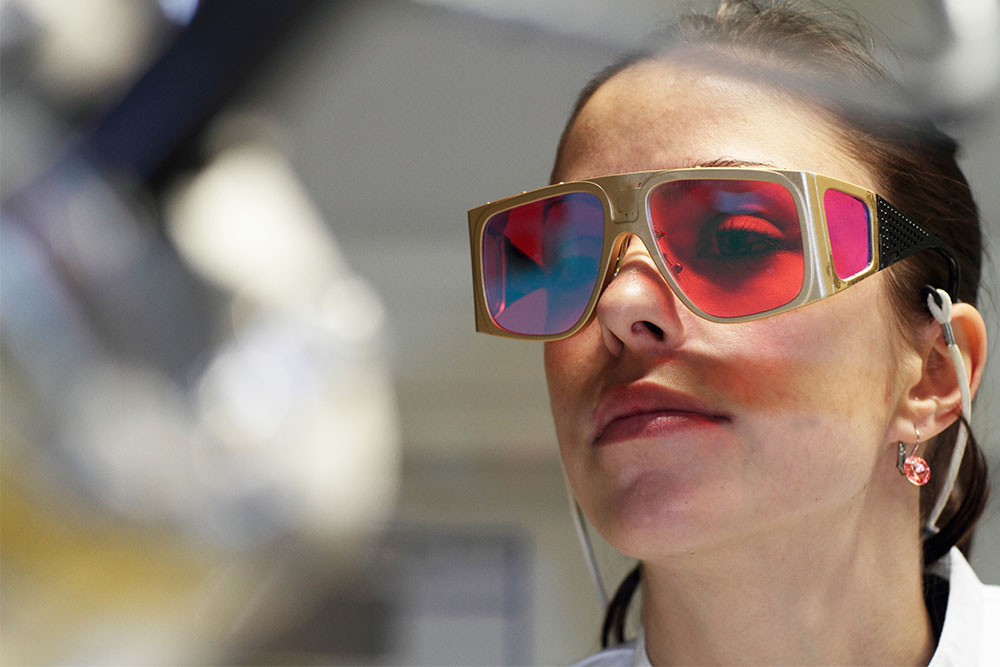
Understanding OD (Optical Density) In Laser Safety Protocols
Quick Summary Optical density ratings determine whether a piece of...
Read more
Understanding Long-Pulsed Nd:YAG Laser Technology
Quick Summary Pulse duration significantly influences how a laser ...
Read more
Nd:YAG Lasers Explained: How They Work And Their Practical Uses
Quick Summary This type of laser combines a neodymium-doped crysta...
Read more