Class 3B Vs. Class 4 Lasers: Understanding The Differences
Quick Summary
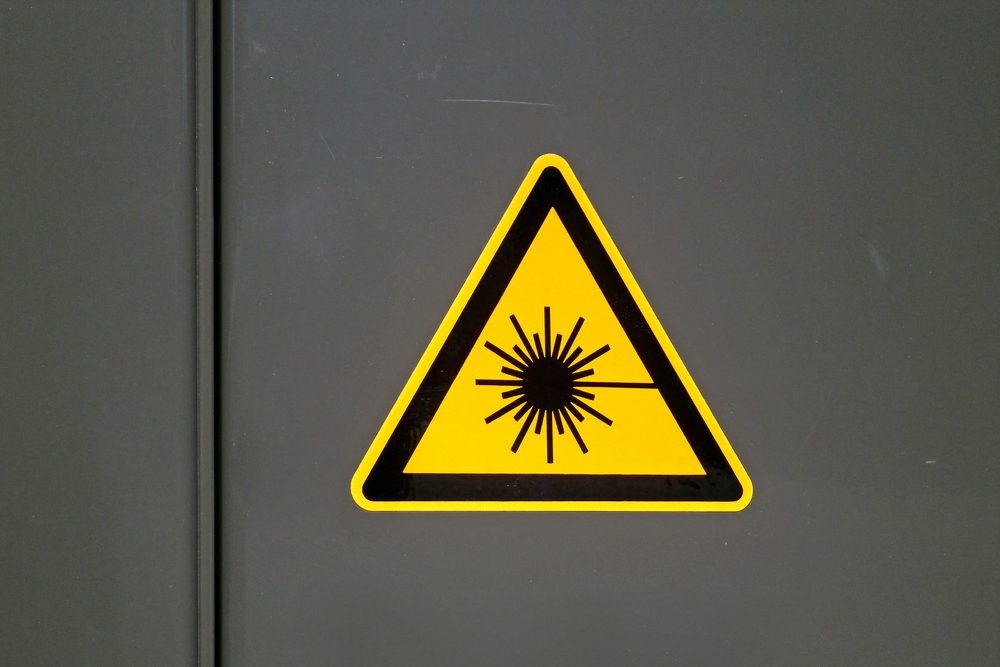
Class 3B and Class 4 lasers both pose direct eye hazards, and Class 4 adds risks from skin burns, fire, diffuse reflections, and process fumes. Higher classes carry stricter FDA product features, including key controls, remote interlocks, and beam attenuators that fail-safe shutters often provide. Workplace controls expand from designated areas at Class 3B to entryway interlocks and fire prevention at Class 4. Choosing the lowest class that meets process goals keeps compliance manageable.
Two laser classes drive most serious safety planning in industrial, medical, and research environments. Engineers designing new equipment, safety officers mapping controlled areas, and buyers reviewing system specs regularly need to distinguish Class 3B and Class 4 lasers.
The two classes sit side by side on the hazard scale, and the line between them can look thin on paper. In practice, crossing that line changes how a beam behaves in a room, which safety features a product carries, and how a workspace needs to be arranged. Getting the classification wrong can leave staff underprotected or burden a facility with controls it does not need.
Where Class 3B and Class 4 Fit Among the Different Classes of Lasers
Laser classification runs from Class 1 to Class 4, with hazard potential rising at each step. The current system follows IEC 60825-1, and ANSI Z136 standards guide how workplaces apply it. Class 3B marks the point where viewing the direct beam can injure the eye. Class 4 carries that risk further and adds dangers to skin, nearby materials, and anyone exposed to scattered light.
Older equipment may carry labels from the previous FDA system, which used Roman numerals. Under that scheme, a Class III laser fell into one of two groups, IIIa or IIIb. Class IIIb lines up closely with today’s Class 3B, and Class IV corresponds to Class 4. Maintenance teams and safety officers who work with legacy systems benefit from recognizing both naming styles.
The boundary between the two classes depends on output power or pulse energy. Exact limits vary with wavelength and exposure duration, so classification belongs with the manufacturer and its test data. Two lasers with similar power ratings can land in different classes when they emit at different wavelengths.
Key Hazard Differences Between Class 3B and Class 4
The clearest way to compare these classes is to look at how each one affects people and surroundings:
Direct beam exposure: Both classes can cause eye injury from direct viewing. With Class 4, damage can occur faster and from greater distances.
Diffuse reflections: Light scattered off a matte surface is generally considered low risk at Class 3B. Class 4 diffuse reflections can injure the eyes, which expands the hazard well beyond the beam path.
Skin exposure: Class 3B output usually falls below the level that causes serious skin injury, though higher-power units can produce minor burns. Class 4 beams can burn skin quickly.
Fire risk: Class 4 beams can ignite paper, plastics, fabrics, and other combustible materials. Class 3B presents limited fire risk under normal conditions.
Secondary hazards: Material processing with Class 4 lasers can release fumes, particulates, and intense plasma light, which calls for ventilation and added shielding.
The takeaway is a matter of reach. A Class 3B hazard concentrates along the beam and its mirror-like reflections. A Class 4 hazard can extend into the surrounding room. Controlling where a beam travels, and when it travels there, becomes central at both levels. This explains why system designers place laser shutters and optical beam shutters at key points along the optical path.
How Product Safety Features Differ by Class
Laser products sold in the U.S. must meet FDA performance standards, and the requirements grow as the class rises. Class IIIb and Class IV products typically include:
Key control: A key or similar lock that prevents unauthorized operation.
Remote interlock connector: A connection point that links the laser to door switches and facility safety circuits.
Emission indicator: A visible or audible signal that warns people when the laser is emitting.
Beam attenuator: A means of blocking output without switching off the laser.
Class 4 systems often go further, with hard-wired enclosure interlocks and redundant beam blocking. Our team at NM Laser Products sees the beam attenuator requirement play out across semiconductor, medical, and research equipment, where a fail-safe shutter frequently fills that role. A shutter that closes on power loss adds protection that holds up even during a system fault. Class 4 sources with significant optical output also call for a high-power laser shutter rated for the energy it absorbs or redirects, with thermal management suited to long duty cycles.
Workplace Controls That Scale With Class
ANSI Z136.1 sets out workplace controls, and the gap between the two classes becomes clear at the facility level. Class 3B work generally takes place in a designated controlled area with warning signs, restricted access, and appropriate eyewear. A Nominal Hazard Zone evaluation identifies where exposure could exceed safe limits, which helps define the boundaries of that area.
Class 4 operations usually require more. Entryway controls such as interlocked doors, illuminated warning signs, and “Danger” signage become standard practice. Curtains or barriers may be needed to contain diffuse reflections. Fire prevention measures, ventilation for process fumes, and stricter training expectations often round out the program.
Facilities working with Class 3B or 4 lasers benefit from written standard operating procedures for normal operation, alignment, and service. Alignment work deserves special attention, as technicians frequently handle open beam paths during setup. Temporary controls, low-power alignment modes, and beam blocks can lower exposure risk during these tasks.
Choosing the Class an Application Calls for
Laser selection starts with the result a process needs to achieve. Cutting, welding, and marking metals usually demand Class 4 output. Spectroscopy, certain sensing tasks, and some alignment work can often run on Class 3B sources. Choosing the lowest class that gets the job done reduces the controls a facility has to maintain over time.
Wavelength also deserves attention. Infrared and ultraviolet beams are invisible, which removes the visual cue that helps people avoid exposure. An invisible Class 3B beam can pose a greater practical risk than its classification suggests, so careful labeling, beam enclosures, and dependable shutters carry extra weight in these setups.
Matching Safety Measures to the Hazard at Hand
Class 3B and Class 4 lasers share a direct eye hazard, and the differences go beyond that. Class 4 adds skin, fire, and diffuse-reflection risks that extend beyond the beam path, along with stricter product and workplace requirements. Recognizing where a system falls on the scale shapes everything from enclosure design to room layout.
For Class 3B or Class 4 designs that need reliable beam blocking, contact our shutter specialists to discuss your application details.
Frequently Asked Questions
Does running a Class 4 laser at lower power change its classification?
No. Classification reflects the maximum accessible output the product can emit, regardless of the setting in use. A Class 4 laser operated at reduced power still requires Class 4 controls, as the full output remains available by turning a dial.
Are pulsed lasers more hazardous than continuous-wave lasers in the same class?
Pulsed lasers concentrate energy into very short bursts, which can produce high peak power and different injury mechanisms. Eyewear, beam blocks, and shutters used with pulsed sources should carry ratings for pulse energy and repetition rate in addition to average power.
How do viewing optics affect Class 3B and Class 4 hazards?
Microscopes, telescopes, and magnifiers can collect and concentrate laser light, increasing the risk of eye exposure. Viewing ports on these systems typically use protective filters or interlocks that block the beam whenever someone looks through the optics.
Do personnel working with these lasers need eye exams?
ANSI Z136.1 recommends medical surveillance for personnel who routinely work with Class 3B and Class 4 lasers. Exact requirements vary by organization, and a baseline exam can help document eye health in the event of a suspected exposure.
Related Blogs
An Essential Guide To Controlling Laser Shutters With Arduino
Quick Summary Arduino boards work well as the timing and logic lay...
Read more
Understanding Advanced Laser Shutters And Rotary Solenoid Pairings
Quick Summary Rotary solenoids swing a shutter blade through a lim...
Read more
How To Identify And Fix Common Laser Shutter Alignment Problems
Quick Summary Clipped beams, light leakage, hot spots, and source ...
Read more