Military Optical Shutter: What Integrators Should Ask Before Specifying

Quick Summary
A military optical shutter blocks or passes a laser beam inside a defense or aerospace system, and it has to keep doing that through shock, vibration and cold. Pin down beam power, aperture and switching time first. Then check fail-safe behavior, cycle life, the test standards your program uses and whether the supplier builds custom units.
Most people looking for a military optical shutter already know what a shutter does. The harder part is the spec. A part that behaves on a quiet optical bench can rattle loose on a vibration table, or slow down at minus 40. By then the housing is drawn and the beam path is fixed.
We’ll go through it in the order we’d work it ourselves. Beam numbers first, then speed and what happens on power loss, then environment and electronics, and last the paperwork and custom work a program office will ask about.
For background on the main designs, see our overview of optical shutter types and their uses.
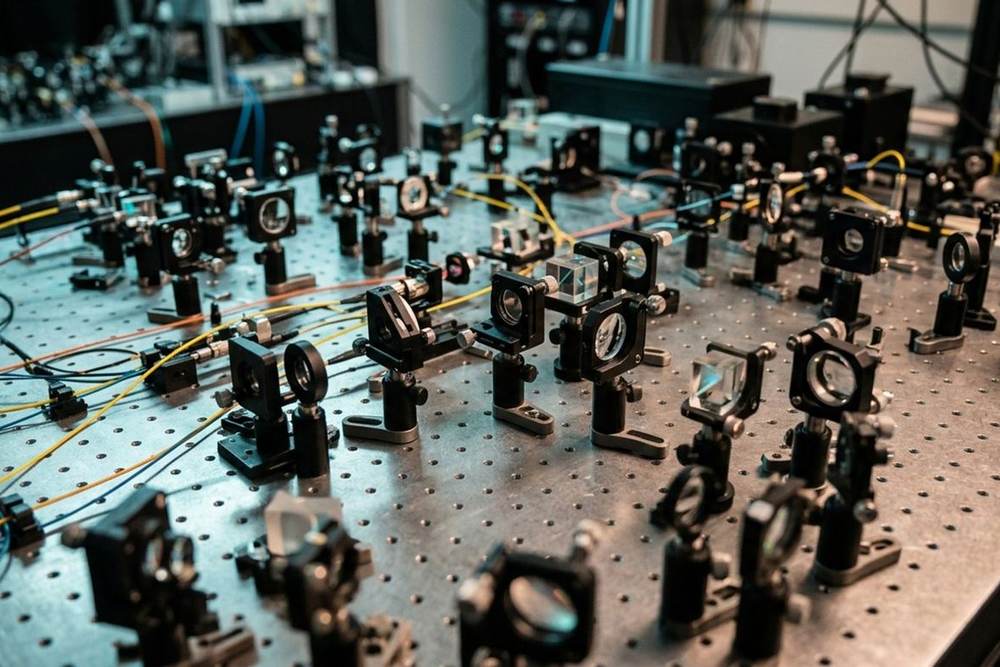
What Makes a Military Optical Shutter Different?
Nothing about the basic job changes. The blade moves into the beam, or out of it. The difference is everything around it: shock loads during transport, hours of vibration in service, wide temperature swings, humidity, and an expectation that it keeps working for years.
Then there’s access. A sealed, fielded system may not be opened until depot maintenance. Nobody will clean the blade or adjust the stop. So simple mechanisms win, and so do margins. We’d rather see a shutter run at half its rated power than at 95 percent.
Records matter too. You will probably need to show how each unit was built and checked, so look at the supplier’s documentation as closely as the hardware.
Optical Questions: Power, Wavelength, Aperture and Damage Threshold
Begin with the beam, because it rules out most designs before anything else does. Our standard line covers a wide spread. The LST-5VDC handles 1 W and the LST200SLP 2 W. The LST300 takes 10 W. At 50 W there are two choices, the LST4WBK2 and the LST400, and above that sit the LST500 at 100 W and the LST800 at 300 W.
Wavelength decides the blade coating, so give the supplier the exact line, not just “infrared.” Apertures in the standard range run from about 2.3 mm up to 16 mm. Leave room for pointing error and for any growth in beam size over temperature.
Pulsed lasers add one more number. Peak fluence can damage a blade that shrugs off the average power. The LST500 is rated to 2 J/cm², and the LST800 to 15 J/cm² at 10 ns.
Every standard model is listed on our Optical Laser Shutters page.
Speed, Fail-Safe Behavior and Lifetime
Speed tracks blade size. The LST200SLP moves in 1 ms. The LST800, carrying a much larger blade for its 16 mm opening, needs about 50 ms. Match the shutter to your shortest exposure and your highest cycle rate, not to a headline number.
Power loss is the question that matters most in a safety-critical system. A fail-safe shutter closes by itself when power goes away. Position sensors on our high-power models tell the controller where the blade really is. Without them, the software is guessing.
Lifetime is usually quoted in cycles. The LST200SLP is rated for billions. Our patented flexure technology has no sliding or rubbing parts, which is why it lasts in places where nobody can service it.
Environmental and Electrical Requirements
Your program almost certainly has its own environmental document. Often it borrows MIL-STD-810 methods for shock, vibration, temperature and humidity. EMI limits commonly come from MIL-STD-461. Send those documents with the first inquiry. A good supplier will tell you which tests a design has already seen, which ones it would still need, and who would run them.
The electronics deserve the same attention. Some of our shutters run straight off 5 V DC. Bigger ones use a driver board such as the CX4000B, which has optically isolated control inputs and a regulated hold current that keeps coil heat down. On tight platforms, weight and power draw count. Check connector type and cable length against your harness and shielding plan early, because changing them late is painful.
How to Choose a Military Optical Shutter Supplier
Find out what ships with each unit. Build records, inspection data and test reports are typical requests. Ask how design changes are handled, too. A quiet substitution of one part can trigger requalification months later. Many programs also prefer domestic sources, and our shutters are designed and built in the USA.
When the catalog doesn’t fit, a custom optical shutter can be designed around your aperture, mounting holes, connector and environment. The earlier that conversation starts, the less the shutter has to be squeezed into leftover space.
Mistakes to Avoid When Specifying a Military Optical Shutter
The most common one is sizing for average power and forgetting pulse energy. A close second is treating the environment as a later problem; a shutter chosen on the bench may need a new mount once vibration testing starts. People also skip position feedback to save a wire, then find they can’t prove the beam was blocked. And the driver board often gets left out of the test plan, even though it rides in the same box.
What to Send Your Shutter Supplier
A one-page sheet saves a week of email. List the laser type and wavelength, power or pulse energy and width, and the beam diameter where the shutter will sit. Add the switching time, cycle rate and required state on power loss. Then the supply voltage, control signal, space envelope and mounting. Attach the environmental and EMI documents. With that in hand, we can usually say within a day whether a standard model fits. The same sheet sets the price, too. Aperture, power rating, extra environmental testing and the paperwork your program needs are what move a quote up or down.
NM Laser Products, Inc. has designed and built laser shutters in the USA since 1987. Our patented flexure technology gives high power handling, fast switching and long life, and we customize shutters for demanding defense and aerospace work. To share your requirements, contact NM Laser Products.
Frequently Asked Questions
What Is the Most Common Style of Optical Shutter in These Systems?
If the beam has to be fully blocked, plan on an electromechanical blade shutter. Where the design also needs very fast modulation, add a second device for that job and keep the mechanical shutter as the safety block.
Which Blade Coating Is Best?
There’s no single best one. Request reflectance data at your exact wavelength, and have the supplier confirm the coating was tested over your temperature range before you sign off.
What Are the Best Optical Shutters Made Of?
Look for metal or dielectric blades matched to the beam and a mechanism without sliding parts. Ask the supplier which materials touch the beam and how they behave over your temperature range.
Is a Mechanical Shutter Better Than an Electro-Optic Modulator?
A mechanical shutter and an electro-optic modulator do different jobs. Modulators switch faster but leak some light when “off,” so they aren’t a full block. Read more on electro-optical modulator shutters before you decide.
Related Blogs
USB Optical Shutters: When Software Control Beats a Manual Switch
Quick Summary USB optical shutters, driven from a PC through a USB...
Read more
Recognizing CO2 Tube Failure: Warning Signs and What to Test
Quick Summary Recognizing CO2 tube failure starts with output: cut...
Read more
Optical Shutter Solenoids: What Drives Shutter Speed in Imaging Systems
Quick Summary Optical shutter solenoids turn a current pulse into ...
Read more