Optical Shutter Solenoids: What Drives Shutter Speed in Imaging Systems

Quick Summary
Optical shutter solenoids turn a current pulse into blade motion, and four things set how fast that happens: the mass of the blade, the force the coil can produce, the return force pulling it back, and how the driver shapes the current. In imaging systems, timing repeatability and heat matter as much as the headline switching time.
Optical shutter solenoids sit at the heart of most electromechanical shutters. A coil pulls on an armature, the armature moves a blade, and the beam is blocked or passed. In microscopy, wafer inspection and other imaging systems, that small motion decides when light reaches the sensor and for how long.
Here we look at what actually controls shutter speed, why the drive electronics matter as much as the coil, how heat and duty cycle limit what you can do, and what to weigh when you replace an aging solenoid shutter or price a new one. For background on how these actuators help imaging performance in general, see our earlier post on how optical shutter solenoids enhance performance in imaging systems.
How Optical Shutter Solenoids Move the Blade
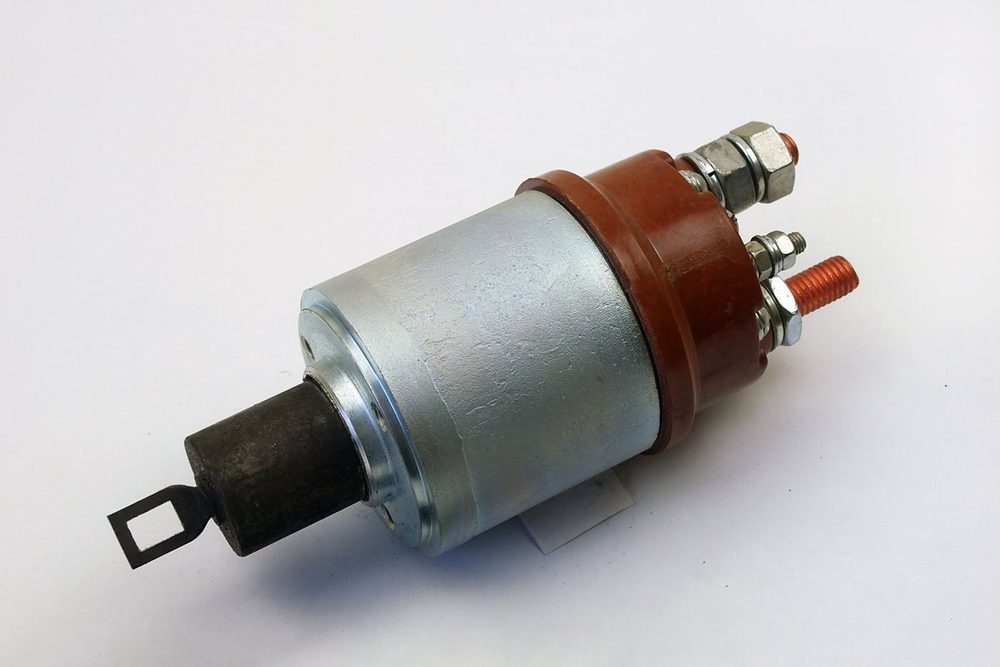
A solenoid-style actuator is a coil of wire around a magnetic path. Current through the coil creates a field that pulls an armature toward it. Attach a blade to that armature and you have a shutter. Cut the current, and a spring or flexure returns the blade to its rest position.
That rest position is where safety comes in. If the blade rests in the beam, the shutter is normally closed and blocks light whenever power drops. Most safety and imaging shutters are built that way. In our designs the moving blade sits on a patented flexure instead of a sliding plunger, so the return force comes from a part that bends rather than rubs.
What Drives Shutter Speed in an Optical Shutter?
Switching time is a contest between force and mass. More coil force moves the blade faster. A heavier blade, which comes with a bigger aperture, moves slower. Our own range shows the trend clearly. The LST200SLP, with a 2.3 mm aperture, switches in 1 ms. The LST-5VDC, at 3 mm, takes 2 ms. The 4 mm LST4WBK2 takes 10 ms, the 8 mm LST400 20 ms, and the 16 mm LST800 about 50 ms.
Closing speed depends on the return force and on how the blade is stopped. A stiff return pulls the blade back quickly, but it also means the coil has to work harder to open it. That’s a design trade, and it’s one reason a shutter built for a 1 ms opening is a small one.
The last factor is how quickly current builds in the coil. Inductance slows the rise, so a driver that applies a higher voltage for the first few milliseconds gets the blade moving sooner than a plain DC supply would.
Repetition rate is the other half of speed. A shutter that opens in a few milliseconds can’t necessarily do it fifty times a second, because every cycle adds coil heat. The LST-5VDC runs continuously at 50 Hz. The LST500 is rated for 10 Hz, with a 15 Hz custom option, and the LST800 for 3 Hz. If your imaging sequence fires in bursts, ask about burst rate and average rate separately, since a shutter can often handle a short run faster than it can sustain all day.
Drive Electronics: Boost, Hold and Brake-Close
A good driver does three things. It applies a short boost to open the blade fast, drops to a lower hold current once the blade is open, and then shapes the closing so the blade lands without bouncing. Our CX4000B controller does all three, with programmable settings and analog or digital control inputs.
Hold current is where heat is won or lost. On the LST400, the driver holds the blade open on about 4 W and uses around 10 W when cycling continuously. The LST500 needs about 5 W to hold and 16 W when cycling at 10 Hz. Drive a coil with full voltage the whole time it’s open and you heat the shutter, the mount and anything nearby, which can shift alignment in a sensitive imaging setup.
For more on the electronics side, our Laser Shutter Drivers page covers the CX4000B in detail.
Timing, Jitter and Exposure in Imaging Systems
Imaging work cares about three numbers, not one. Delay is the time between the trigger and the blade starting to move. Transit is how long the blade takes to cross the beam. Jitter is how much those times vary from shot to shot. A shutter with a fast transit but loose timing can still smear a short exposure.
Two habits help. Trigger the shutter and the detector from the same hardware line, and use position sensors where the model offers them so the software knows when the blade is really open. Then measure the delay once in your own system and build it into the sequence.
Optical Shutter Solenoid Replacement and Cost
Older solenoid shutters with sliding plungers wear. Friction rises, timing drifts, and eventually the plunger sticks. When that happens, it’s worth asking whether a like-for-like part is the best fix. Match the aperture, drive voltage, timing and footprint first. If the original was a sliding-plunger design, a flexure-based shutter can often drop into the same space and last far longer, and a custom version can match old mounting holes and connectors. Before you swap anything, log the old shutter’s delay and transit in the running system. Those numbers give you a target for the new part and a quick way to confirm the replacement behaves the same.
We don’t publish prices, because cost depends on configuration. The biggest drivers are aperture size, power rating, blade optics, whether you need a controller, and any custom mounting or connector. Quantity matters too. Share those details and we’ll quote the exact setup.
Frequently Asked Questions
Do Solenoid Optical Shutters Wear Out?
Yes, if they use sliding plungers, so log timing at installation and recheck it at each service to catch drift early. Designs where the blade rides on a flexure avoid most of that wear. Our LST200SLP, for example, is rated for billions of cycles. Check the rated cycle life against your expected duty, then plan service around it.
Can I Replace a Solenoid Shutter With a Flexure-Based One?
Often, yes. Start with the aperture, the drive voltage, the switching time you need and the space available. If a standard model doesn’t match the old mounting holes or connector, a custom version can. Bring the old part’s dimensions and your timing data, and test the replacement in the real system.
How Fast Can an Optical Shutter Solenoid Open?
Opening time depends mainly on the aperture. Our smallest standard shutter, the LST200SLP with a 2.3 mm aperture, switches in 1 ms, while the 16 mm LST800 takes about 50 ms. A driver with a boost stage gets the blade moving faster than plain DC, so match the controller to the shutter.
Optical Shutters From NM Laser Products
NM Laser Products, Inc. has designed and built laser and optical shutters in the USA since 1987. Our patented flexure technology gives fast, repeatable, long-life switching, and we offer matched drivers and custom builds for imaging and inspection systems. To work out the right shutter and drive for your timing, contact NM Laser Products.
Request a quote with NM Laser Products, Inc..
Related Blogs
USB Optical Shutters: When Software Control Beats a Manual Switch
Quick Summary USB optical shutters, driven from a PC through a USB...
Read more
Recognizing CO2 Tube Failure: Warning Signs and What to Test
Quick Summary Recognizing CO2 tube failure starts with output: cut...
Read more
OEM CO2 Beam Shutters: Standard or Custom Options for Machine Builders
Quick Summary Most machine builders can start with standard OEM CO...
Read more