Exploring The Science Behind Laser Shutter Speed
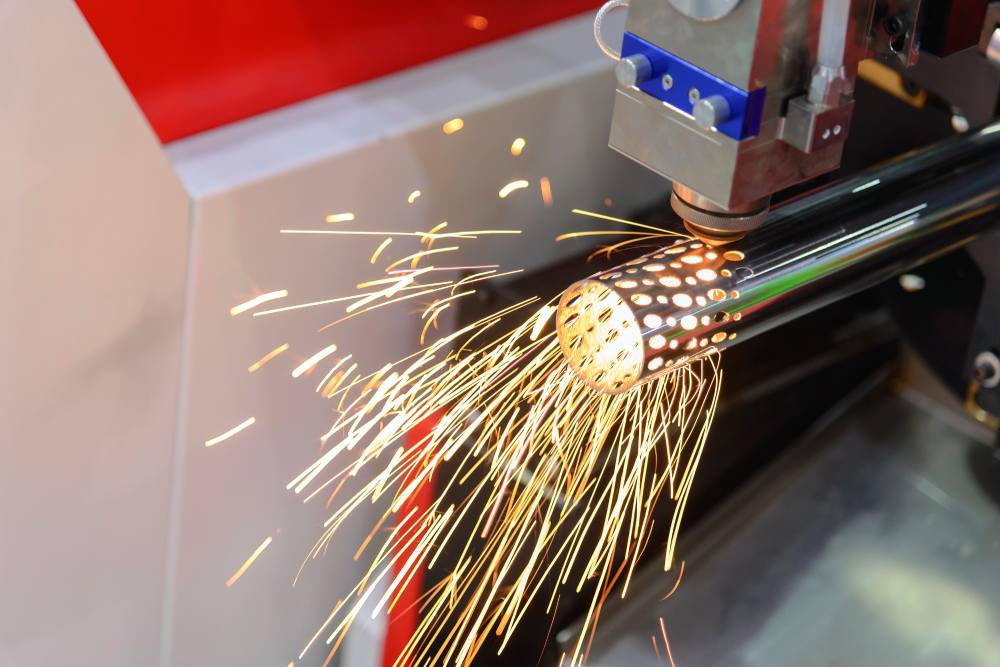
Laser shutter speed governs how long light reaches a sensor or target, shaping measurement accuracy and image clarity. In optical engineering, timing precision influences data quality more than raw power. Knowing the interactions among motion, exposure, and detection reveals why timing control remains a defining design parameter across laser-based applications.
Fundamentals of Shutter Speed in Optical and Laser Systems
Shutter speed in laser systems refers to the duration that light transmission remains open within an optical path. This timing governs photon accumulation at the detector and affects signal strength. Many platforms rely on a custom optical shutter to coordinate laser emission with sensing and data capture.
Laser shutters and optical beam shutters differ in actuation methods, yet both aim to regulate exposure precisely. Mechanical, electro-optical, and electronic drivers each introduce timing characteristics.
Selecting an approach depends on response speed, repeatability, and how tightly exposure must align with system motion.
Exposure Time, Motion Blur, and Measurement Accuracy
When exposure extends beyond object movement, motion blur appears. In laser inspection or imaging, blur reduces edge definition and alters measured dimensions. Shorter exposures limit this effect but restrict the total light reaching the sensor during each measurement cycle.
Accuracy emerges from balancing exposure against motion dynamics. High-speed processes demand tight timing margins to preserve spatial fidelity. Engineers often synchronize shutter timing with motion controllers to capture repeatable snapshots that represent true object geometry rather than averaged movement.
The Role of Illumination and Aperture in High-Speed Shuttering
Short exposure intervals place higher demands on illumination intensity. As exposure decreases, light levels must rise or optical throughput must improve to maintain usable signals. Aperture size becomes a major factor, which influences how much light enters the imaging system.
Wider apertures increase brightness but reduce depth of field. This trade-off affects focus consistency across uneven surfaces. Optical designers adjust lighting geometry, lens selection, and working distance to maintain image clarity while supporting fast shutter operation.
Optical Methods for Measuring Laser Shutter Performance
Optical testing measures actual light transmission instead of inferred mechanical motion. A laser beam interrupted by the shutter and detected downstream reveals true exposure duration. This method captures timing behavior under realistic operating conditions.
Photodetectors convert light transitions into electrical signals that digital systems timestamp precisely. Compared with indirect measurement techniques, optical testing reflects real exposure behavior. Engineers use this data to validate specifications and refine control strategies for optimal laser shutter speed.
Sensor Selection and Response Time Considerations
Detector response time limits how effectively short exposures can be measured or applied. Photodiodes and phototransistors respond faster than photoresistive elements, supporting microsecond-scale timing. Sensor bandwidth must exceed shutter transition speeds to prevent signal distortion.
Electronic processing also affects timing accuracy. Comparator thresholds, sampling rates, and clock resolution shape measured results. Selecting sensors and electronics as a unified signal chain produces an accurate representation of rapid optical events.
Practical Challenges in High-Speed Laser Shutter Testing and Calibration
High-speed testing introduces alignment and noise challenges. Small misalignments between the laser and the detector can skew the measured exposure. Ambient light and electromagnetic interference may also influence readings during short-duration tests.
Repeatability depends on stable conditions and consistent geometry. Engineers often gather multiple measurements to characterize timing statistically. Shielding, optical isolation, and disciplined setup practices improve confidence in shutter performance data.
Synchronization of Shutter Timing with Motion Control Systems
High-speed optical systems often rely on precise coordination between shutter actuation and motion stages. Timing mismatches can result in partial exposures or positional errors. Synchronization aligns shutter opening with encoder feedback or trigger signals so light transmission occurs at predictable spatial positions.
Motion controllers, cameras, and shutters share a common timing reference. Hardware triggers reduce latency compared with software commands. This coordination produces repeatable capture during scanning, indexing, or continuous transport. It maintains consistent measurements as system speeds increase.
Thermal and Mechanical Factors Affecting Shutter Timing Stability
Temperature changes influence shutter materials, actuators, and drive electronics. Thermal expansion can alter mechanical tolerances, while heat buildup affects coil resistance and response speed. Over time, these factors introduce timing drift that appears as variation in exposure duration.
Mechanical wear also contributes to instability. Bearings, springs, and linkages change behavior with repeated cycling. Engineers account for these effects through material selection, duty cycle limits, and periodic verification, so the shutter responds predictably under sustained operational conditions.
Timing Mastery in Advanced Optical Applications
Exposure timing control influences imaging clarity, dimensional accuracy, and system repeatability. Shutter behavior links optical physics with electronic control and mechanical motion. A structured understanding of these relationships supports informed design choices across demanding laser-based applications.
For specialized guidance on shutter technologies and integration and to learn more about laser shutter speed, do not hesitate to contact us at NM Laser Products today.
Related Blogs
UV Laser Vs. Green Laser: Navigating The Differences
Ultraviolet and green lasers serve very different purposes despite ...
Read more
The Fundamentals Of Industrial Laser Power: What To Know
Industrial laser systems depend heavily on controlled energy delive...
Read more
Laser Wavelength Vs. Temperature: Understanding Their Relationship
Temperature changes can subtly influence how laser systems behave a...
Read more