How Laser Shutter Technology Enhances Optical Communication In Space
Quick Summary
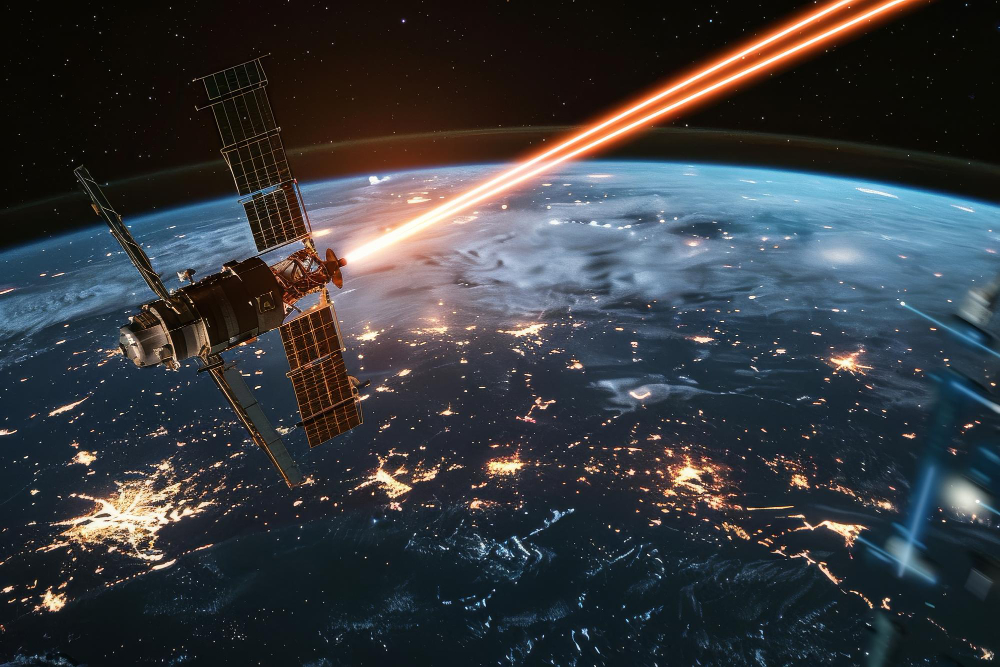
Laser shutter technology protects sensitive receivers and supports precise beam gating in laser in telecommunication systems built for satellite and deep space links. Reliable shutters allow ground teams to safely calibrate optical terminals before launch, while onboard systems depend on the same fast, repeatable switching to manage signal timing once the spacecraft reaches orbit.
Sending data across thousands of miles of space with a beam of light demands a level of precision that radio frequency systems never had to meet. Laser shutter telecommunication systems sit at the center of that precision, gating the beam during calibration, protecting sensitive detectors from excess power, and supporting the signal timing that keeps a data link synchronized.
Much of this work depends on high-speed optical shutters capable of switching in milliseconds without drifting off timing over millions of cycles.
Why Optical Communication Is Moving Toward Laser in Telecommunication Networks
Radio frequency links have carried satellite data for decades, but bandwidth demand keeps climbing as missions send back higher resolution imagery and larger data sets. Laser in telecommunication applications offers a way forward, since a tightly focused beam carries far more data per second than a radio signal spread across a wide frequency band.
The tradeoff is precision. A laser link needs near-perfect pointing accuracy between two moving spacecraft or a spacecraft and a ground station, along with hardware that can gate and modulate the beam fast enough to keep the data stream intact.
How Laser Sensors Work Within an Optical Communication System
Understanding how laser sensors work helps explain why beam control hardware plays such a large role in these systems. Photodetectors at the receiving end convert incoming light into an electrical signal, while separate tracking sensors monitor beam position to keep the transmitter and receiver aligned as both platforms move.
These sensors are sensitive by design, which means they need protection from excess power during testing, calibration, or unexpected pointing errors, since a sensor damaged by overexposure can end a mission’s communication capability without a way to repair it once the spacecraft is in orbit.
The Role of Laser Shutter Telecommunication Systems in Space Applications
During ground testing and integration, engineers need a reliable way to gate the beam without disturbing the rest of the optical path. Laser shutter telecommunication systems fill that role, closing the beam path during alignment checks, protecting detectors during power-up sequences, and supporting the modulation shutter technology needed to test data timing before launch.
Once in orbit, similar gating principles support onboard safety interlocks, closing the beam automatically if a fault condition is detected during operation.
Why Reliability Counts More in Space Than Anywhere Else
A shutter failure on a production floor means a maintenance call and a short delay. A shutter failure on a spacecraft means a permanent loss of function, since there is no way to send a technician into orbit for a repair.
This is why space-rated hardware gets specified with a wide safety margin on cycle life, often calling for a high-cycle-life shutter model built to handle billions of open and close cycles across a mission that may run for years. Vacuum operation and extreme temperature swings add further demands beyond what most ground-based systems ever encounter.
Components That Support Fast, Precise Beam Gating
Building an optical communication terminal around these requirements often means moving past standard catalog parts. Mission profiles vary widely in power level, switching speed, and thermal environment, so many programs turn to a custom shutter design built around the specific mission parameters instead of adapting a generic model to fit.
Getting these specifications right early in the design process avoids costly rework once hardware moves into qualification testing.
Space-Grade Shutter Solutions from NM Laser Products
At NM Laser Products, we build the shutters and controllers that support optical communication terminals from ground testing through orbital operation. Our team has spent over 35 years developing high-power, high-reliability shutter technology, and every unit we manufacture is made in the USA to meet demanding mission requirements.
If your program calls for a standard model or a fully custom design built around a specific cycle life, switching speed, or thermal profile, we work directly with your engineering team to match the shutter to the mission. Our components are built for long service life, often rated for hundreds of millions of cycles, so beam control stays dependable from the first ground test to years of operation in orbit.
Reach out to our team to talk through your optical communication project, or submit your specs through our online RFQ page to get a shutter built around your exact requirements.
FAQs
Why is laser in telecommunication gaining ground over traditional radio frequency links?
A focused laser beam carries far more data per second than a radio signal spread across a wide frequency band, which supports the growing bandwidth needs of modern satellite missions.
How do laser sensors work to keep an optical link aligned?
Tracking sensors monitor beam position between the transmitter and receiver, feeding that data back to pointing systems that make small adjustments as both platforms move.
Why do laser shutter telecommunication systems need such a long cycle life rating?
Space missions often run for years without any chance for repair or replacement, so shutters need to handle a very high number of open and close cycles without performance drift.
Related Blogs
Benefits Of CO2 Dental Lasers In Modern Dentistry
Quick Summary CO2 dental lasers cut and coagulate soft tissue at t...
Read more
Erbium YAG Laser Vs. CO2 Laser: Which Is Better?
Quick Summary Erbium YAG lasers target water in the skin more aggr...
Read more
How To Accurately Measure The Power Of Your CO2 Laser
Quick Summary Accurate CO2 laser power measurement depends on usin...
Read more