How To Accurately Measure The Power Of Your CO2 Laser
Quick Summary
Accurate CO2 laser power measurement depends on using a properly rated thermal or calorimetric sensor, capturing the full beam without clipping, and accounting for pulsed versus continuous-wave output. Dental and fractional CO2 systems add extra variables, since duty cycle and spot pattern change what a power meter reads at any given moment.
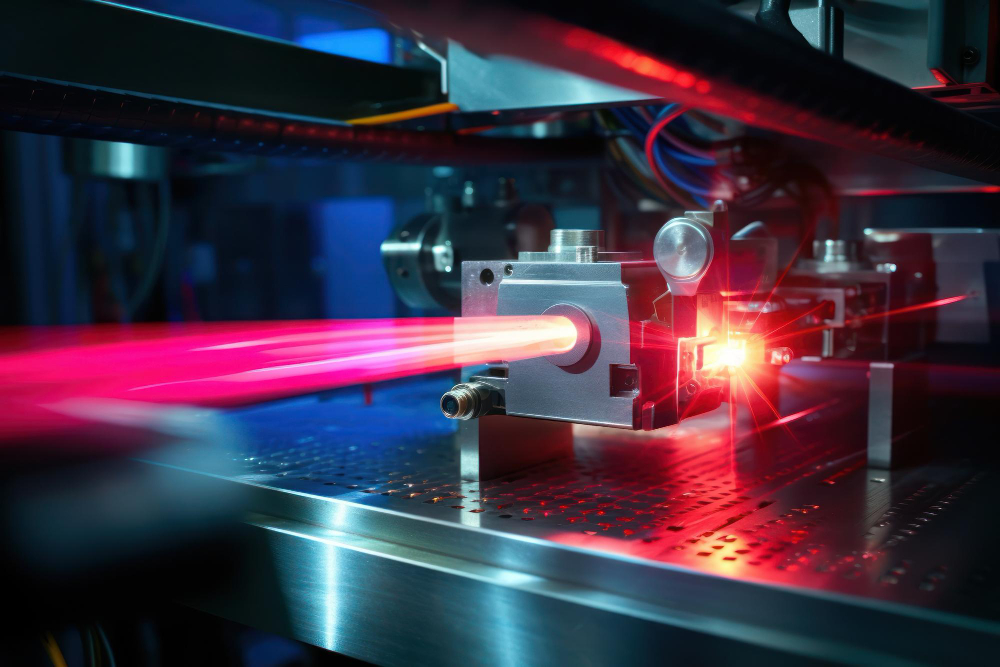
A power reading that is off by even a small margin can throw off an entire process, from a manufacturing cell to a research lab or a clinical setting. Getting CO2 laser measurement right starts with understanding how the beam behaves before it ever reaches a sensor, and how a CO2 laser shutter fits into that setup to protect both the equipment and the person taking the reading.
A stray reflection or an improperly captured beam can produce numbers that look fine on a display but do not match what the laser is delivering to the workpiece or the patient.
Why Accurate CO2 Laser Power Measurement Counts
Every CO2 laser application depends on knowing the true output power delivered to the target. In industrial cutting or marking, a reading that drifts from the true value leads to inconsistent cuts, wasted material, and unpredictable cycle times. In medical and dental settings, the stakes are higher, since power directly affects tissue response, treatment depth, and patient safety. Small measurement errors compound over time, particularly on systems that run for extended shifts or see frequent use across multiple providers. Regular measurement, paired with a beam control system that delivers the same exposure every time, keeps output where the operator expects it to be instead of drifting quietly in the background.
Tools and Methods for Measuring CO2 Laser Power
Thermal power meters remain the most common tool for CO2 laser measurement because they absorb the full beam and convert that energy into a heat signal the meter can read directly. Calorimetric sensors work well for higher power systems, while thermopile sensors suit lower power, continuous applications.
Positioning the sensor correctly is just as important as picking the right type, since the beam has to land fully inside the active area without spilling past the edge. Many setups route the beam through a CO2-rated shutter model before it reaches the sensor, which allows the operator to gate exposure precisely and take a reading for a known, repeatable duration instead of guessing when the beam is on and off.
Recording several readings over a short window, rather than relying on a single snapshot, also helps flag a sensor that has started to drift before it throws off downstream calibration work.
Measuring Power in a CO2 Dental Laser System
A CO2 dental laser typically runs at lower average power than an industrial cutting system, but the readings still need to be exact because treatment settings are tied directly to clinical outcomes. Dental CO2 systems often operate in short pulses rather than a steady beam, so the meter and the surrounding equipment need to account for peak power alongside average power.
Clinics that skip regular calibration risk delivering more or less energy than the settings display, which can affect healing time and patient comfort. Pairing routine calibration with a safety interlock shutter on the delivery system adds a layer of protection, closing the beam path automatically if the interlock circuit senses a fault during a procedure.
Fractional Laser vs. CO2: How Power Measurement Differs
A fractional CO2 laser splits the beam into an array of tiny spots instead of delivering one continuous beam across the treatment area. This changes how power measurement needs to be approached. A standard meter reading the average output will not show the peak fluence hitting each individual spot, which is the number that determines treatment depth in the tissue.
Comparing a fractional laser vs. CO2 continuous-wave system means looking past the headline wattage and examining pulse energy, spot spacing, and duty cycle together. Manufacturers building fractional handpieces often need a high-energy pulsed shutter that can gate the beam fast enough to match the scanning pattern without adding lag between spots, since inconsistent timing shows up directly in treatment uniformity.
Common Mistakes That Skew CO2 Laser Power Readings
A few recurring habits throw off CO2 laser measurement more than any equipment issue. Watch for these:
- Taking a reading before the laser has fully warmed up and stabilized
- Using a sensor rated below the system’s actual output range
- Letting the beam clip the edge of the sensor’s active area
- Skipping recalibration after moving or servicing the optical path
Correcting these habits often costs nothing beyond a few extra minutes of setup time, yet it keeps every later reading trustworthy instead of guesswork dressed up as data. Logging each reading alongside the date, ambient temperature, and beam control settings used at the time also makes it far easier to spot a slow drift before it turns into a costly process shift.
Precise CO2 Beam Control from NM Laser Products
At NM Laser Products, we build the CO2-rated shutters and controllers that keep beam delivery consistent across industrial, dental, and research CO2 laser systems. Our team has spent over 35 years refining high-power, high-reliability shutter technology, and every unit we manufacture is made in the USA to hold up under continuous use.
If your application calls for a standard CO2 model or a fully custom design built around a specific pulse pattern or duty cycle, we work directly with your engineering team to get the timing and power handling right from the first prototype. Our shutters are built for long service life, often rated for hundreds of millions of cycles, so measurement stays accurate and process output stays repeatable shift after shift.
Reach out to our team to talk through your CO2 laser project, or submit your specs through our online RFQ page to get a shutter built around your exact requirements.
FAQs
How often should a CO2 laser power meter be recalibrated?
Most facilities recalibrate every few months, though systems running multiple shifts a day or handling variable materials benefit from more frequent checks to catch drift early.
Do CO2 dental lasers need different measurement equipment than industrial CO2 systems?
Dental CO2 lasers usually run at lower power and rely on shorter pulses, so the meter needs a sensor sensitive enough to capture accurate readings at that lower range.
Why does a fractional CO2 laser show a different power reading than a continuous-wave CO2 laser?
A fractional handpiece splits the beam into many small spots, so a standard average power reading will not reflect the peak fluence each spot receives during treatment.
Related Blogs
Why You Should Consider An LCD Optical Shutter
Quick Summary Liquid crystal shutters block and transmit light thr...
Read more
Why Choose A CO2 Laser Shutter Manufacturer For Your Business Needs
Quick Summary Selecting a manufacturer for CO2 laser shutter compo...
Read more
Why Adjusting The Diagonal On Your CO2 Laser Machine Matters
Quick Summary How well a CO2 laser machine's beam tracks acro...
Read more