Laser Safety Enclosures: Requirements And What To Know

Quick Summary
Enclosures serve as a central engineering control for laser systems, but their effectiveness depends on how well they work with interlocks, access controls, and beam-stopping devices.
Facilities that approach enclosure design as a simple compliance checkbox can overlook important gaps in the overall safety system. Those weaknesses may remain unnoticed until an incident prompts a more thorough review.
Laser safety enclosures are designed to physically contain a laser beam within a defined area, preventing stray radiation from reaching personnel who are not directly involved in the operation.
For facilities operating Class 3B or Class 4 laser systems, an enclosure is a critical safeguard against accidental exposure. Designing one correctly involves much more than constructing a physical box around the equipment.
Material selection, interlock positioning, access procedures, and beam containment all influence how effectively an enclosure performs its intended function.
Why Enclosures Are a Regulatory Baseline
ANSI Z136.1 and related IEC standards establish expectations for controlling laser hazards within a facility, with enclosures playing an important role within the hierarchy of controls.
Engineering controls such as enclosures, interlocks, and beam shutters generally take precedence over administrative measures such as warning signs or personal protective equipment. This hierarchy reflects the value of physical safeguards that reduce dependence on human actions during high-risk situations.
A properly designed enclosure blocks direct and reflected beam paths using materials rated for the specific wavelength and power level of the laser it contains.
Ordinary sheet metal, plastic panels, or glass may not stop a high-power laser beam. Selecting an unsuitable material can create a dangerous false sense of security.
Facilities should have documentation confirming that the enclosure materials meet the applicable attenuation requirements for the specific laser class before depending on the enclosure as a primary safeguard.
What Goes Into a Compliant Enclosure
A compliant enclosure incorporates several design considerations at the same time. Access panels need interlocks that interrupt laser output when a panel is opened. This helps prevent exposure during maintenance, adjustment, or servicing.
Viewing windows, when used, must have an optical density rating appropriate for the laser’s wavelength and power. A viewing port without sufficient attenuation can undermine the containment function of the entire enclosure.
Beam entry and exit points also require careful attention. Any location where a beam passes through an enclosure wall, whether for delivery to a workpiece or diagnostic monitoring, needs an appropriate protective measure.
This is often where safety laser shutter components become important. A shutter can close the beam path at a controlled location instead of relying exclusively on the enclosure walls for containment.
Ventilation introduces another design challenge. Many laser processes produce fumes or particulates that require extraction. Any ventilation opening incorporated into an enclosure must be designed so it does not create an unintended path for laser radiation to escape.
Balancing airflow requirements with beam containment calls for careful engineering, particularly in production environments where equipment operates through continuous cycles.
Where Shutters Fit Into Enclosure Design
Enclosures and shutters solve different parts of the same problem. An enclosure contains the beam within a defined boundary, while a shutter physically blocks the beam path at a specific point, frequently at the source or at a critical junction in the optical train.
Facilities running complex setups typically rely on both.
Laser shutters and optical beam shutters installed at strategic points within an enclosure give operators a fast, reliable way to interrupt beam output without shutting down the entire laser system.
This matters during alignment, calibration, or troubleshooting, when operators need repeated, controlled access to the beam path without exposing themselves or coworkers to unnecessary risk.
A well-placed shutter also protects downstream optics and sensors from unwanted exposure during setup, extending the working life of expensive components.
Response speed is also a factor worth close attention.
A shutter that closes within milliseconds of a trigger signal offers dramatically better protection than a slower mechanical alternative, particularly in interlock-triggered scenarios where a panel opening needs to cut beam output before a person could reach the exposure point.
Custom Enclosure and Shutter Configurations
Standard enclosure kits work for straightforward laser setups, but plenty of facilities run configurations that do not fit a generic template.
Odd equipment footprints, multiple beam paths, legacy control systems, or specialized wavelength requirements all push a project toward custom solutions.
A custom optical shutter built around a facility’s specific mounting constraints and control interface removes the guesswork that comes with adapting an off-the-shelf product to fit.
Custom builds also solve compatibility problems between older laser systems and newer control architecture, which becomes a growing issue as facilities upgrade equipment piecemeal over time rather than replacing entire systems at once.
Getting enclosure and shutter specifications right the first time avoids costly rework later. Retrofitting a poorly matched component after installation often costs more in labor and downtime than specifying the correct part from the start.
The Real Cost of Getting This Wrong
Laser incidents involving inadequate enclosures or missing interlocks carry consequences that extend well beyond the immediate injury risk. Regulatory violations, insurance complications, and facility shutdowns during investigation all follow from a documented safety gap.
Even a near-miss incident can trigger a full audit of every laser system on site, consuming staff time and resources that could have gone toward productive work.
The financial argument for getting enclosure design right the first time is straightforward. A properly specified shutter or enclosure component costs a fraction of what a single incident investigation, OSHA citation, or equipment replacement would run.
Facilities that treat laser safety as a one-time compliance task, rather than an ongoing engineering responsibility, tend to discover this the hard way.
We manufacture our shutters and optical components here in the USA, and we have spent over 35 years working directly with laboratories, manufacturers, and research facilities to solve exactly these kinds of enclosure and containment challenges.
Every component NM Laser Products builds goes through testing that reflects the real conditions our customers operate in, not just a baseline compliance checklist.
Cutting corners on enclosure design or shutter selection is one of the more expensive mistakes a facility can make, both in dollars and in risk exposure.
Working with a manufacturer that sees the full picture, from wavelength compatibility to response speed to mounting constraints, reduces that risk from the outset rather than catching problems after installation.
That approach has kept facilities coming back to NM Laser Products for their most demanding laser safety projects.
If you have any questions about NM Laser Products, please don’t hesitate to reach out.
Frequently Asked Questions
Do laser safety enclosures need to be inspected on a regular schedule?
Yes. Interlocks, viewing windows, and access panels should be checked periodically for wear, misalignment, or damage that could compromise containment. Facilities typically build this into their broader equipment maintenance schedule rather than treating it as a separate task.
What is the difference between an interlock and an enclosure?
An enclosure is the physical structure containing the beam, while an interlock is the mechanism that interrupts beam output when a panel, door, or access point is opened. Both work together, but neither replaces the other.
Can one enclosure design work across multiple laser classes?
Not reliably. Material thickness, interlock response time, and viewing window attenuation all need to match the specific power and wavelength of the laser inside, so a design built for one class may fall short for a higher-power system.
Related Blogs
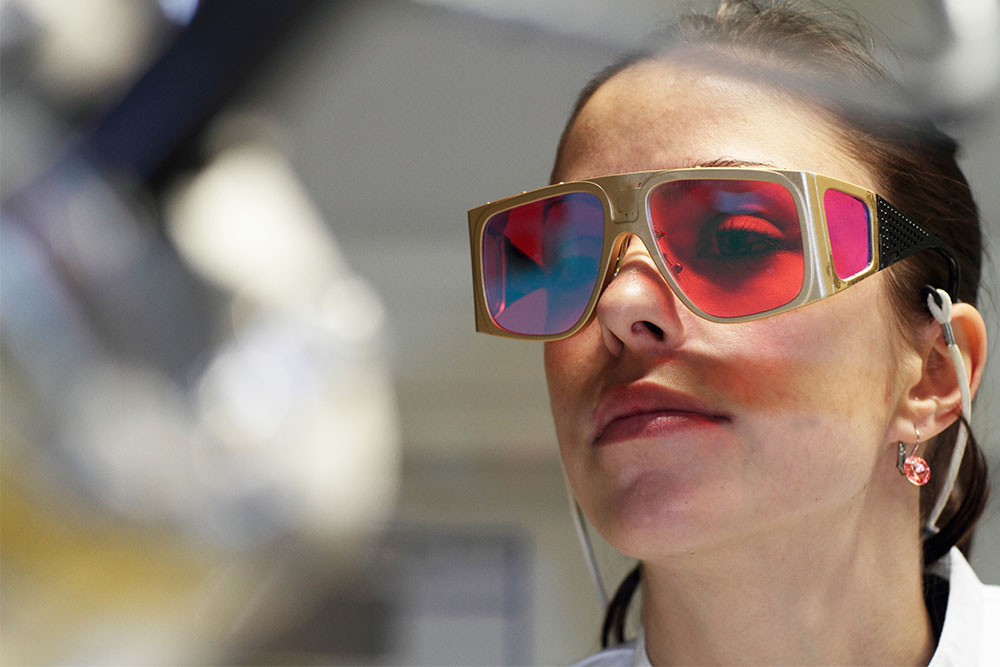
Understanding OD (Optical Density) In Laser Safety Protocols
Quick Summary Optical density ratings determine whether a piece of...
Read more
Understanding Long-Pulsed Nd:YAG Laser Technology
Quick Summary Pulse duration significantly influences how a laser ...
Read more
Nd:YAG Lasers Explained: How They Work And Their Practical Uses
Quick Summary This type of laser combines a neodymium-doped crysta...
Read more