What You Need To Know About High-Intensity Laser Shutters

Quick Summary
A high-intensity laser shutter has to survive the beam it blocks, and four things decide whether it does: the blade’s damage threshold, the path that carries blocked energy away as heat, the choice of reflective or absorptive blades, and fail-safe logic tied into your interlocks. The deciding check is your own beam at the shutter plane, measured as peak fluence and irradiance against the rated threshold with margin to spare. Long closures at full power and unusual wavelengths such as CO2 are where a custom design earns its place.
Imagine a shutter blade parked in a 100-watt beam through a ten-minute maintenance pause, with all of that energy landing on thin metal. Surviving that pause is the whole job of a high-intensity laser shutter, which puts it in a tougher class of optical shutters than the units that time low-power exposures.
NM Laser Products has engineered laser shutters in San Jose for more than 35 years. In high-power systems, trouble starts in four places: the blade, the heat path, the closing logic, and the interlocks.
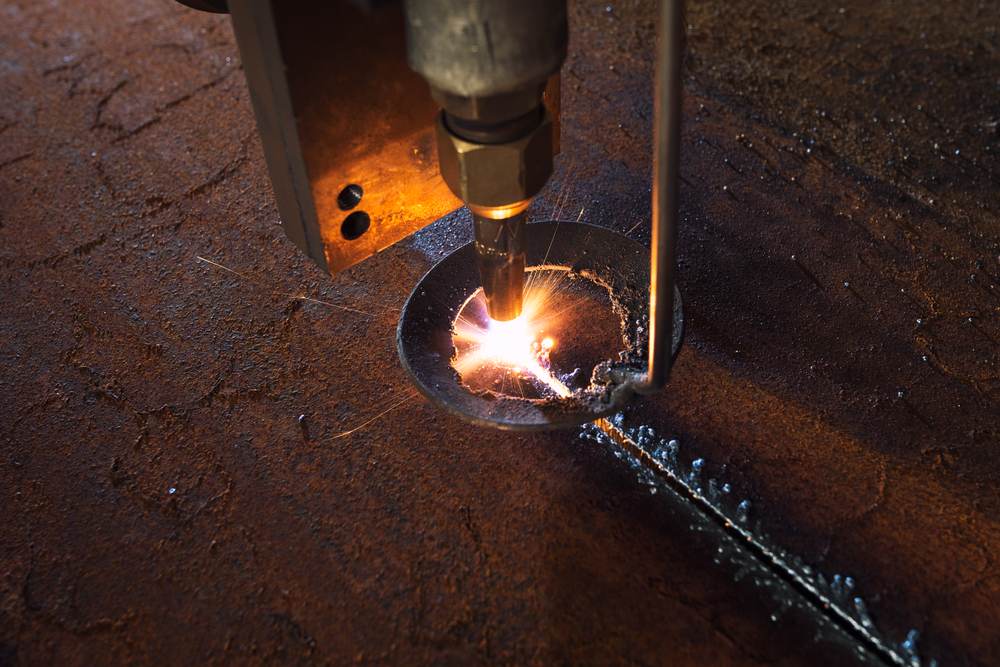
What Sets A High-Intensity Laser Shutter Apart?
Ordinary shutters gate light for timing or alignment. Put that same blade in front of a source that cuts, welds, or ablates, and its material, coating, and the heat path through the housing become the real limits.
CW and pulsed lasers punish a blade differently: steady CW power arrives as heat, and short pulsed peaks can pit the surface before the part feels warm.
Damage Threshold And Irradiance On A High-Power Laser Shutter Spec Sheet
Read the laser-induced damage threshold (LIDT) first. Pulsed ratings come in J/cm² and CW ratings in W/cm², and neither figure means much until you match the wavelength and pulse width it was measured at to your own source.
Next, find what your beam delivers at the shutter. Irradiance is power over beam area, so a 4 mm spot carries about sixteen times the irradiance of a 16 mm spot at equal power. Mounting the shutter where the beam is wide buys the blade real margin.
Our LST500 lists 100 W of optical power handling, a 2 J/cm² LIDT, and a 15 mm aperture, and the LST800 steps up to 300 W with a 16 mm aperture. Hold those against your beam, then check the wider high-power laser shutter range for a catalog unit that can serve as the high beam shutter in your line.
Beam Dumps And Heat Sinking In A High-Intensity Laser Shutter
Closing a shutter only moves the problem, because blocked light becomes heat in the blade, an internal dump, or an external one.
Duty cycle sets the thermal budget. A shutter gating millisecond exposures barely warms up, whereas one held shut at full power through a long setup step needs a solid conduction path to the mounting plate. Some systems add water or forced-air cooling on top of that.
Reflective Vs. Absorptive Blades For High-Power Laser Beams
Mirror-coated blades bounce the beam into a dump and keep the bulk of the heat off the blade. The coating has to match your wavelength, though, and the reflection needs a safe place to land.
Absorptive blades soak up the energy themselves. The optical path stays simple, yet the blade and heat sink carry the full thermal load. Wavelength narrows the choice again, because a coating suited to UV may struggle at the 10.6 µm output of a CO2 laser. Our piece on high-power laser shutter technology covers how blades, actuators, and housings fit together.
Fail-Safe Closure And Interlocks In Laser Safety Systems
A safety-rated shutter should close when power drops. Normally closed designs use spring force to drop the blade the moment the drive signal disappears, so a power loss, a cut cable, or a controller fault leaves the beam blocked.
Position sensing matters just as much, because a shutter that reports its state lets the controller confirm closure before an enclosure door opens or an E-stop resets. Fail-safe claims deserve documented testing behind them, so ask how closure time and cycle life were verified.
Choosing A High-Intensity Laser Shutter For Your Beam Line
Before you order, check wavelength, peak and average power, beam size at the shutter, LIDT margin, cooling, aperture, fail-safe state, and interlock I/O. When a catalog model misses one, a custom shutter is often the cleaner fix, and NM Laser Products designs and manufactures both in San Jose.
Talk through your beam parameters with our engineers at NM Laser Products and see where our patented flexure technology fits your system.
Frequently Asked Questions
What does a high-intensity laser shutter cost?
Price follows aperture, power rating, cooling, and how much customization the build needs. Send your wavelength, power, and beam size with the request, and the quote can price the full requirement.
What is the difference between a laser shutter and a laser safety shutter?
The safety version is the one wired into your interlock circuit, and it has to close on its own when power goes away. A shutter sold for exposure timing may lack that behavior, so confirm its de-energized state before it guards anything.
Can one shutter handle both CW and pulsed lasers?
Yes, if its spec sheet lists a pulsed LIDT and a CW power rating that both clear your beam. Ask for the test conditions behind each figure, because a pass on one says little about the other.
How often should a high-power laser shutter be inspected?
Inspect the blade on a schedule tied to exposure hours and after any fault. Discoloration, pitting, or haze means your damage margin is thinner than planned.
Does a high-intensity laser shutter need its own controller?
You need a drive signal and, for safety use, a way for the shutter to report its position. Some designs run from a simple voltage, and others pair with a dedicated driver such as our CX4000B.
Related Blogs
Why Investing In An OEM CO2 Laser Beam Shutter Is Essential For Your Business
Quick Summary An OEM CO2 laser beam shutter is specified with the m...
Read more
USB Optical Shutters Explained: What You Should Know
Quick Summary A USB optical shutter is a beam shutter whose driver ...
Read more
Understanding AOMs And Shutters: Key Information You Need
Quick Summary Think of the AOM as the sprinter and the mechanical m...
Read more