Laser Shutter Drivers For Semiconductor Manufacturing Processes
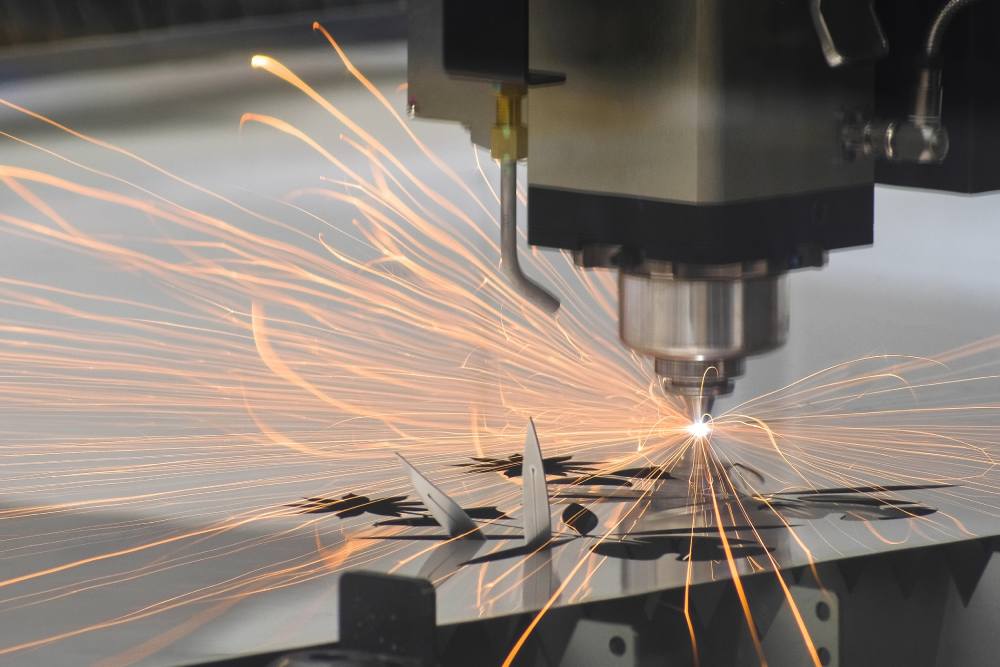
Laser shutter drivers play a specialized role in semiconductor fabrication, where light control directly affects measurement and patterning accuracy.
Within this context, the laser shutter driver for semiconductor manufacturing coordinates timing between laser sources and process equipment. Early process steps often rely on an optical laser shutter to regulate exposure intervals.
Role of Laser Shutter Drivers in Semiconductor Manufacturing
Laser shutter drivers manage electrical signals that control light emission during critical semiconductor processing steps. They synchronize exposure windows with equipment motion, inspection cycles, and measurement routines. Through precise control of opening and closing intervals, these drivers help maintain repeatable process timing across lithography, inspection, and metrology tools used in advanced fabrication facilities.
Within complex manufacturing environments, shutter drivers act as intermediaries between laser sources and control architectures. Their performance affects alignment accuracy, exposure consistency, and system responsiveness.
In applications using an optical laser shutter, driver stability influences how precisely light delivery matches defined process parameters over extended production runs without variation today.
Relationship between Laser Diode Drivers and Shutter Control Systems
Laser diode drivers and shutter drivers operate as complementary elements within laser-based semiconductor tools. Diode drivers regulate current levels and pulse characteristics, while shutter drivers manage mechanical or electro-optical light blocking. Together, they determine when light is generated and when it reaches the target surface during processing operations.
Coordination between these systems supports consistent laser behavior during rapid cycling. Improper synchronization may introduce timing offsets, resulting in exposure mismatch or measurement drift.
Integrated control architectures increasingly link diode output regulation with shutter actuation logic to maintain predictable system behavior during high-throughput manufacturing conditions.
Precision Timing Requirements in Semiconductor Laser Applications
Semiconductor processes rely on tightly controlled timing to maintain dimensional accuracy. Laser shutter drivers handle sub-millisecond transitions that define exposure boundaries. Even small timing deviations can influence pattern edges, measurement repeatability, or inspection results across densely packed wafer features in modern fabrication environments.
Rapid actuation enables laser systems to function effectively in applications that rely on pulsed operation instead of continuous emission. Shutter drivers convert digital control instructions into mechanical movement or modulation signals with very low delay.
Integration of Laser Shutter Drivers with Time-of-Flight Systems
Time-of-Flight sensing platforms depend on precisely timed light bursts to evaluate distance and surface properties. Shutter drivers establish clear emission intervals while blocking unwanted light, creating well-defined pulses for measurement. Clear pulse boundaries improve the reliability of return signal interpretation in semiconductor inspection and alignment systems that use ToF methods.
When integrated into ToF architectures, shutter drivers coordinate closely with sensing electronics and illumination timing. Consistent gating reduces background noise and limits stray reflections. This coordination supports stable measurements during wafer positioning, component inspection, and equipment calibration routines in cleanroom environments.
Importance of High-Speed Current Control for Laser Emission Stability
Laser emission behavior depends on stable electrical input during operation. While current regulation occurs at the diode driver level, shutter drivers influence effective emission by controlling exposure intervals. Rapid transitions place additional demands on electrical stability across the system architecture.
High-speed shutter actuation requires predictable electrical behavior to avoid transient effects. Coordinated timing between shutter drivers and current regulators helps limit optical artifacts.
Safety and Protective Features in Industrial Laser Shutter Drivers
Industrial laser systems rely on layered safeguards to control light exposure and reduce operational risk. Shutter drivers commonly integrate interlock logic, fault monitoring, and defined fail-safe states. These mechanisms reduce unintended laser emission during maintenance work, alignment procedures, or unexpected system conditions within fabrication equipment.
Protective design elements also align with established industrial safety requirements. When abnormal signals or power disruptions occur, shutter drivers react quickly to limit uncontrolled light output.
Laser Shutter Drivers in Optical Alignment and Metrology Systems
Optical alignment systems require tightly regulated laser output to achieve accurate angular and positional measurements.
Shutter drivers determine when alignment beams activate, enabling consistent reference measurements across repeated cycles. Precise timing contributes to dependable results during tool installation and scheduled calibration routines.
In metrology applications, managed exposure minimizes background interference and stray reflections. Shutter drivers define discrete measurement windows, allowing clean signal capture. This capability aids surface flatness evaluation, stage positioning checks, and optical path verification in semiconductor production settings.
Impact of Laser Shutter Control on Cleanroom Manufacturing Accuracy
Cleanroom operations depend on stable and predictable optical behavior across all process tools. Shutter drivers influence exposure frequency and duration as laser light enters sensitive manufacturing zones. Carefully controlled light interaction helps reduce contamination risks linked to unnecessary optical activity.
Consistent shutter performance also reinforces repeatable process conditions across multiple shifts and production batches. Stable timing characteristics contribute to uniform outcomes and help maintain yield consistency in high-volume manufacturing environments.
Automotive-Grade and Industrial-Grade Standards for Laser Driver ICs
Some semiconductor tools incorporate components derived from automotive-grade electronics. Shutter drivers designed to similar standards offer extended temperature tolerance, long operational life, and predictable failure behavior. These attributes align with continuous operation common in fabrication facilities.
Compliance with industrial-grade requirements further simplifies integration into regulated production environments. Shutter drivers that meet recognized quality benchmarks align with reliability expectations for inspection, lithography, and metrology systems throughout semiconductor manufacturing lines.
Advancements in Intelligent Control Interfaces for Laser Shutter Drivers
Modern shutter drivers increasingly incorporate digital interfaces for configuration and monitoring. Serial communication allows integration with centralized equipment controllers. This connectivity supports remote diagnostics, parameter adjustment, and synchronized operation across multiple laser subsystems.
Adaptive timing profiles add another layer of flexibility. Shutter behavior can change in response to process stage, inspection mode, or equipment condition. Such adaptability fits well within semiconductor workflows that evolve as process complexity increases.
Future Direction of Laser Shutter Driver Adoption in Fabrication Tools
As semiconductor processes advance, laser usage continues to expand across inspection and measurement tasks. Shutter drivers will adapt to higher speeds, tighter tolerances, and greater integration with digital control systems. These developments align with increasing automation across fabrication facilities.
The laser shutter driver for semiconductor manufacturing remains a key element in maintaining controlled exposure as tools progress. Ongoing integration with sensing, safety, and control systems will influence future designs and help meet the precision demands of advanced semiconductor nodes.
Integrating Custom Laser Shutters for System-Level Performance
Successful integration of a custom laser shutter depends on aligning optical, mechanical, electrical, and safety considerations within the overall system architecture.
Careful planning, informed component selection, and thorough validation support predictable operation across research and industrial environments. When these elements are addressed cohesively, the shutter functions as a stable and reliable part of the laser system rather than an isolated accessory.
For guidance on laser shutter driver solutions aligned with semiconductor manufacturing requirements, contact us at NM Laser Products today.
Related Blogs
Why You Should Consider An LCD Optical Shutter
Quick Summary Liquid crystal shutters block and transmit light thr...
Read more
Why Choose A CO2 Laser Shutter Manufacturer For Your Business Needs
Quick Summary Selecting a manufacturer for CO2 laser shutter compo...
Read more
Why Adjusting The Diagonal On Your CO2 Laser Machine Matters
Quick Summary How well a CO2 laser machine's beam tracks acro...
Read more