CO2 Laser Settings: How To Optimize For Different Uses
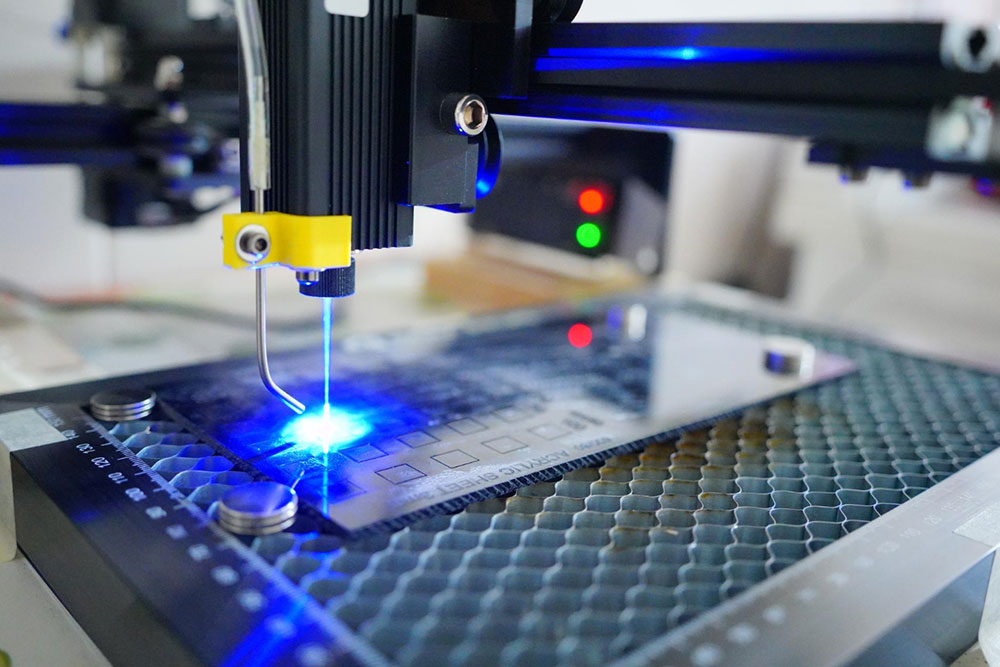
CO2 lasers have been workhorses in industrial and scientific environments for decades. Their longevity in the field comes down to one thing: versatility. A single platform can cut thick polymers on a production line in the morning. It can also process delicate medical components in the afternoon, as long as the settings are adjusted correctly.
Understanding CO2 laser settings directly determines output quality, process consistency, and the long-term reliability of the system itself. At NM Laser Products, we work alongside engineers and system integrators who operate these lasers inside demanding capital equipment environments. Getting the parameters right at the system level is something we understand well.
CO2 Laser Settings: The Parameters that Affect Performance
Before optimizing anything, it helps to understand what each parameter actually controls and why it matters.
Power
Power determines the amount of energy the laser delivers to the material. Higher power means more thermal energy at the interaction point. Excessive power on a thin or heat-sensitive material can cause charring, melting, or structural damage; too little and the process stalls.
Power is typically expressed as a percentage of the system’s maximum output. The correct level depends on both the material and the operating mode.
Speed
Speed controls how fast the beam moves across the material. Slower speeds mean longer dwell time, further energy penetration, and more heat transfer into the material. Faster speeds reduce exposure time and minimize heat accumulation. The balance between power and speed is where most of the fine-tuning happens in practice.
Frequency (Pulse Rate)
Frequency is the number of laser pulses emitted per second, measured in Hz. This is one of the more nuanced settings. Lower frequencies produce longer pulse intervals. It allows more energy per pulse and is better suited to material removal.
Higher frequencies produce more pulses per second, delivering energy more continuously, and are better suited to fine surface work and edge quality. CO2 laser frequency ranges can span from around 1,000 Hz to well above 20,000 Hz, depending on the system.
Focal Depth
Focal depth determines where the laser beam converges to its smallest, most intense point. Focusing precisely on the material surface produces the sharpest, cleanest interaction. Moving the focal point slightly below the surface increases the effective power transfer into thicker materials. An incorrect focal depth blurs the beam interaction and degrades output quality regardless of how well the other settings are configured.
Understanding how these parameters interact is the starting point. Knowing how to adjust them for specific uses is where the real expertise comes in.
Continuous Wave Vs. Pulsed Mode: Choosing the Right Operating Mode
One of the most important decisions in CO2 system configuration is whether to operate in continuous-wave (CW) or pulsed mode. These modes distribute energy differently, and the choice has downstream effects on output quality, heat management, and what beam control components the system requires.
Continuous wave mode delivers a steady, uninterrupted beam. CW operation is suited to applications that need consistent thermal input over time, such as sustained cutting of thick materials or welding. The energy delivery is stable and predictable, making it easier to maintain uniform results during long processing runs.
Pulsed mode releases energy in discrete bursts at a set repetition rate. Peak power per pulse is significantly higher than average output power. This makes pulsed operation useful for applications that need high intensity for a short period rather than sustained heating. It is commonly used for precision drilling, perforating, and working with heat-sensitive materials, where the heat-affected zone must be kept minimal.
The choice between these modes isn’t just about process outcomes. It also affects how beam control components need to be specified, including CO2 laser shutters. A shutter in a CW system handles sustained power loads. In a pulsed system, it needs to respond quickly and reliably to each pulse cycle. It must open and close in coordination with the system’s beam gating during repositioning or safety events.
How Settings Affect Beam Control Requirements
Parameter choices don’t exist in isolation. The way a CO2 laser is configured determines what the rest of the system needs to handle. Here’s how settings translate into beam control requirements:
- High-power CW operation demands shutters and optical components rated for sustained thermal loads without degradation
- Pulsed operation at high repetition rates requires shutters with fast actuation and precise timing synchronization
- Frequent beam interruption during processing, such as repositioning between cuts, puts high cycle-count demands on any mechanical beam control component in the path
- Varying power levels across different jobs mean beam control components need to perform reliably across a range of conditions, not just at peak output
Our laser shutters and optical beam shutters are engineered to operate across these conditions in industrial, medical, and scientific environments where CO2 systems run continuously under demanding duty cycles.
Settings Matter, But So Does Every Component Around Them
Optimizing CO2 laser settings is important work. Getting the parameters right improves output quality, reduces material waste, and extends the life of the system’s optical components. However, even with perfect settings, the component will underperform if the surrounding components aren’t up to the task.
A shutter that cannot keep up with the pulse cycle can limit system performance. An optical element that degrades under sustained high-power loads can also restrict what the laser settings can achieve in practice.
At NM Laser Products, we’ve spent over 35 years building components for CO2 systems in environments where that gap between good settings and reliable hardware matters. If your system involves high-power CO2 processing and you want to talk through beam control requirements, reach out to our team.
Related Blogs
YAG Laser Wavelength Explained: A Guide For Professionals
Engineers and system designers working with laser-based equipment q...
Read more
Understanding Industrial Laser Level Types
Walk through any semiconductor fab, medical device facility, or pho...
Read more
Q-Switch Laser Vs. CO2 Laser: Choosing The Right Option
Selecting the right laser type for a professional system is rarely ...
Read more