Understanding Industrial Laser Level Types
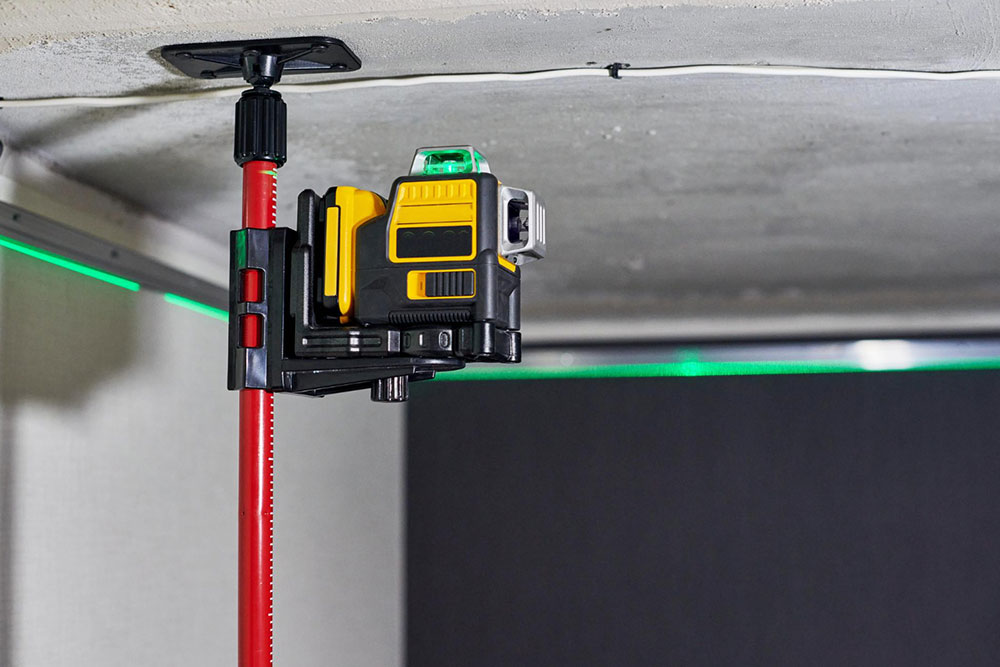
Walk through any semiconductor fab, medical device facility, or photonics research lab, and you’ll find lasers doing work that most people never see. These are precision instruments operating at power levels capable of cutting metal, ablating tissue, or sequencing DNA. Understanding how industrial laser level classifications work is the first step to understanding why the systems built around them are engineered the way they are.
Industrial Laser Level Classification: What the Classes Mean
The laser classification system exists for one reason: to define how dangerous a laser is under normal operating conditions. Classifications run from Class 1 through Class 4, and the gap between the lowest and highest is significant.
Class 1
Class 1 lasers are considered safe under normal use. They don’t produce radiation levels that pose a hazard to eyes or skin during standard operation. Many industrial systems that house high-power lasers in protective enclosures are rated Class 1 at the system level because the enclosure reduces the accessible emission to safe levels.
Class 2
Class 2 covers low-power visible lasers, generally under 1 milliwatt. The natural blink reflex is enough to protect most people from accidental exposure. These are common in alignment tools and some barcode readers.
Class 3R and Class 3B
Class 3R is a low-risk category, but direct viewing can still cause eye damage under the wrong conditions. Class 3B is where things get more serious. Direct exposure at this level can cause immediate eye injury, and a formal laser safety program becomes mandatory. Continuous-wave Class 3B lasers are capped at 0.5 watts, but the risks are real enough to warrant strict engineering and administrative controls.
Class 4
Class 4 is the category most relevant to professional-level industrial, medical, and scientific applications. These lasers can cause severe, permanent eye damage and burns to the skin.
Diffuse reflections are hazardous, and fire risk is also a factor. Most high-performance industrial laser systems fall into this class, which is why the engineering controls surrounding them are so involved.
The Main Industrial Laser Types in Use Today
Classification tells you about hazard potential. The laser medium tells you what the system does and where it performs best.
Fiber Lasers
Fiber lasers run at roughly 1090 nm and are known for high output and speed. They dominate metal processing applications, including cutting, welding, engraving, and annealing. Automotive and aerospace manufacturing rely heavily on fiber laser systems, and so does medical device fabrication.
CO2 Lasers
CO2 lasers have a long wavelength of around 10.6 micrometers, which makes them well-suited for cutting and processing non-metals, organics, and thick-section materials. They’ve been workhorses in manufacturing for decades and remain common in industrial production lines.
UV Lasers
UV lasers operate at 355 nm, produced by passing a 1064 nm beam through crystals. The short wavelength creates extremely high absorption in materials, enabling cold ablation with minimal heat damage. Microelectronics, medical device manufacturing, and precision marking applications favor UV systems for exactly this reason.
Each of these laser and optical beam shutter types produces different power levels, beam profiles, and interaction characteristics with materials. Choosing the right medium for an application is as important as understanding the classification level at which it operates.
Where Beam Control Enters the Picture
Once you’re working with Class 3B or Class 4 laser systems, beam control is built into regulatory requirements under both ANSI Z136.1 and FDA guidelines.
For Class 4 systems specifically, a shutter at the laser output is typically wired into a safety interlock circuit. When access is attempted or an unsafe condition arises, the shutter closes. The beam doesn’t travel further. This is the foundation for ensuring high-power laser environments remain safe for operators.
Here’s what beam control requirements at this level generally include:
- Fail-safe shutters that close automatically on power loss or interlock trigger
- Interlocks tied to enclosure panels, entryways, and access points
- Emergency stop functions with both local and remote activation
- Beam termination in non-reflective, non-combustible barriers
- Position sensors to confirm shutter state during operation
Precision at High Power Demands Reliable Components
Understanding the types of industrial laser levels is really about understanding the demands placed on each component in the system. The higher the class, the more precise and reliable the surrounding engineering needs to be.
At NM Laser Products, we’ve spent over 35 years building shutters for the environments where failure is not an option. Our products are used in medical equipment, semiconductor capital equipment, research systems, and industrial manufacturing lines where Class 3B and Class 4 lasers operate continuously.
If you’re working on a system that requires fail-safe beam control, reach out to our team and let’s talk through your application’s needs.
Related Blogs

7 Benefits Of UV Laser Marking For Sensitive Materials
Quick Summary UV laser marking creates permanent, high-contrast ma...
Read more
A Guide To UV Laser Singulation For Precision Cutting
Quick Summary UV laser singulation uses short, high-energy pulses ...
Read more
Benefits Of CO2 Dental Lasers In Modern Dentistry
Quick Summary CO2 dental lasers cut and coagulate soft tissue at t...
Read more