Laser Wavelength Vs. Temperature: Understanding Their Relationship
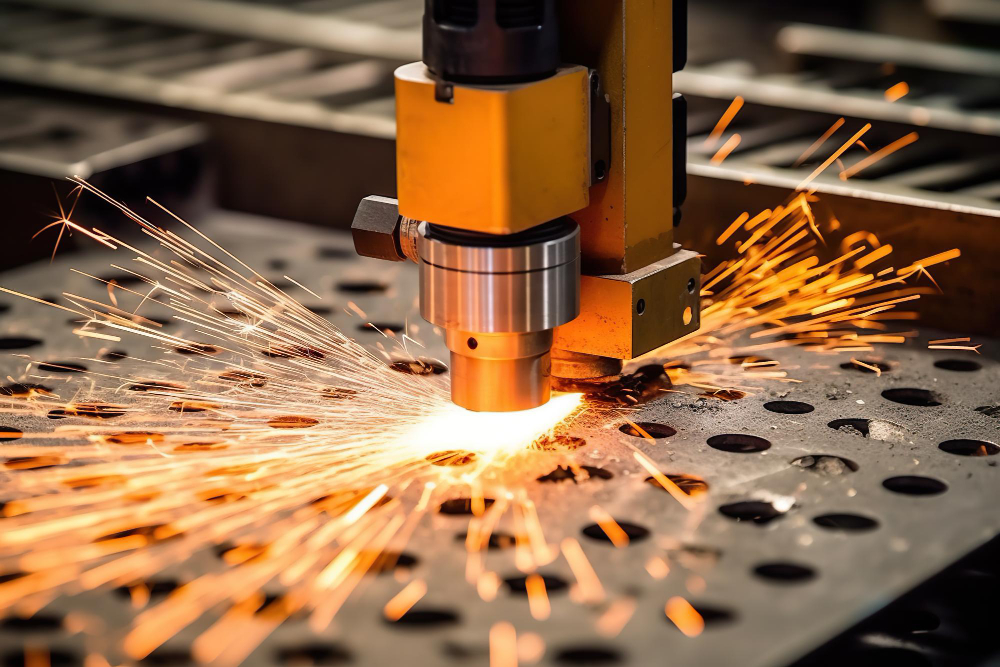
Temperature changes can subtly influence how laser systems behave at the optical level. This blog explains how heat affects wavelength stability, system performance, and real-world laser applications.
The relationship between laser wavelength vs. temperature begins with the way heat alters the physical properties of laser materials. As temperature rises or falls, slight shifts occur in the energy levels within the laser medium, which can affect emitted wavelength stability.
To grasp this properly, it helps to answer, “What is laser wavelength?” Laser wavelength describes how a light wave is structured over distance and is usually measured in nanometers. This value defines how the beam interacts with different materials and optical systems.
In practical environments, even small temperature fluctuations can influence this wavelength output. These shifts may not always be visible, but they can impact precision applications where tight tolerances are required.
Engineering teams working with OEM and custom lasers often account for thermal behavior during the design phase. Adjustments in housing, cooling, and optical configuration help maintain wavelength consistency across operating conditions.
Systems that incorporate laser shutters and optical beam shutters rely on stable optical conditions to maintain consistent exposure timing during operation. Thermal drift can introduce subtle changes that must be managed through system design.
Accurate performance also depends on an understanding of alignment, beam properties, and polarization information. These parameters interact with thermal conditions and influence how energy is delivered to a target surface.
Why Temperature Affects Laser Emission
Temperature impacts laser systems at a molecular level. As materials heat up, atomic spacing and refractive properties can shift slightly. These changes influence how light is generated and transmitted.
In semiconductor lasers, for example, increased temperature can cause a slight red shift in wavelength. This means the emitted light moves toward longer wavelengths as heat increases.
Cooling systems are often used to stabilize this behavior. By maintaining a controlled environment, engineers can reduce unwanted wavelength variation and improve system reliability.
Clear knowledge involving wavelength vs. temperature relationships is necessary for applications that require consistent optical output.
Material Behavior and Thermal Sensitivity
Different laser materials respond uniquely to temperature changes. Solid-state, gas, and diode lasers each exhibit distinct thermal characteristics.
Solid-state systems may show gradual wavelength drift as crystal structures expand or contract. Gas lasers tend to be more stable but still experience minor shifts under extreme conditions.
Diode lasers are more sensitive to temperature changes due to their semiconductor structure. This makes thermal management especially important in compact or high-power systems.
Material selection matters greatly in reducing thermal sensitivity and maintaining consistent output.
Optical Stability in Real-World Environments
Laser systems rarely operate in perfectly controlled laboratory conditions. Industrial environments introduce fluctuations that can affect thermal stability.
Ambient temperature changes, equipment heat buildup, and airflow variations all contribute to system behavior. These external factors can affect wavelength output over time.
Maintaining optical stability requires careful system design. This includes thermal insulation, active cooling, and precision component alignment.
Stable operation means that performance can remain predictable across different environments.
Beam Characteristics Under Thermal Stress
Beam characteristics such as divergence, focus, and intensity distribution can shift slightly with temperature changes. These changes are often subtle but relevant in high-precision applications.
As temperature increases, internal optical components may expand microscopically. This can affect beam alignment and focus position.
Polarization states may also experience minor shifts depending on system design. These changes can affect how energy interacts with materials during processing.
Monitoring these helps maintain consistent system output.
Temperature Control in Laser Design
Thermal management is a core part of laser system engineering. Designers often incorporate cooling systems, heat sinks, and temperature feedback loops to maintain stability.
Active temperature control allows systems to operate within a defined range, reducing the likelihood of wavelength drift.
Passive methods, such as material selection and structural design, also contribute to thermal stability. These approaches help minimize expansion effects and maintain optical positioning.
Together, these strategies support long-term system reliability.
Thermal Awareness for Reliable Laser Performance
We work with engineers and manufacturers who depend on stable laser performance in demanding environments. Our experience allows us to support applications where thermal behavior and optical control are non-negotiable.
We design and manufacture laser shutters and optical beam shutters that provide reliable control under changing operating conditions. Our products are made in the United States and built for long cycle life, consistent performance, and high optical power handling.
We also support OEM and custom lasers with solutions designed to maintain stability as temperatures shift. Our focus is on delivering components that support accurate beam control and long-term reliability.
If you have any questions about NM Laser Products, Inc. or need assistance selecting the right shutter for your system, please contact us today.
FAQs
How does temperature affect laser wavelength stability?
Temperature changes can cause slight shifts in wavelength due to material expansion and refractive index variations.
Why is cooling important in laser systems?
Cooling helps maintain stable operating conditions and reduces unwanted wavelength drift.
Do all lasers respond the same way to temperature changes?
No. Different laser types such as diode, solid-state, and gas lasers each react differently to thermal variation.
Related Blogs
Understanding OD (Optical Density) In Laser Safety Protocols
Quick Summary Optical density ratings determine whether a piece of...
Read more
Understanding Long-Pulsed Nd:YAG Laser Technology
Quick Summary Pulse duration significantly influences how a laser ...
Read more
Nd:YAG Lasers Explained: How They Work And Their Practical Uses
Quick Summary This type of laser combines a neodymium-doped crysta...
Read more