Why You Should Consider An LCD Optical Shutter
Quick Summary
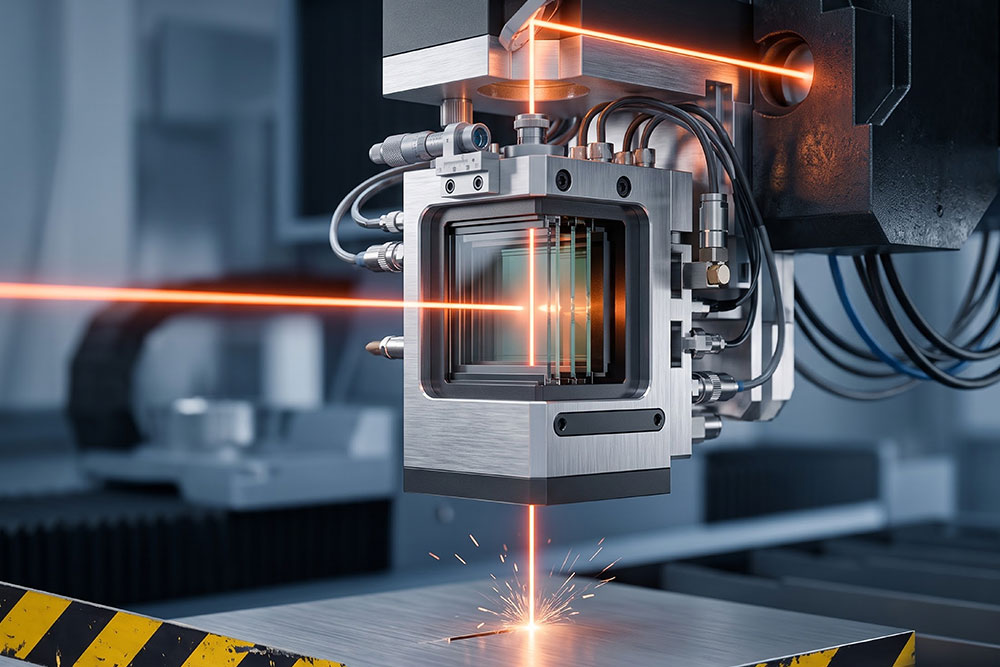
Liquid crystal shutters block and transmit light through an electronic polarization change rather than a moving blade, giving low-power optical systems a fast, vibration-free way to control a beam. For applications built around imaging light or other low-power sources, this design offers a real alternative to mechanical shutter mechanisms.
Anyone comparing shutter options for a low-power optical system eventually runs into the LCD optical shutter as an alternative to a mechanical blade design, and the difference between the two comes down to how each one physically blocks light.
A mechanical shutter moves a solid blade across the beam path, while a liquid crystal shutter changes the polarization state of a cell to switch between blocking and transmitting light, with no moving parts involved at all.
NM Laser Products builds optical shutters across both categories, matched to the power level and switching speed each application calls for.
What Makes an LCD Shutter Different From a Mechanical Shutter
A mechanical shutter relies on a blade, solenoid, and spring or motor assembly to physically interrupt a beam path. An LCD shutter replaces that entire mechanism with a liquid crystal cell sandwiched between polarizing filters.
Applying a voltage across the cell rotates the orientation of the liquid crystal molecules, which changes whether light passing through the first polarizer can also pass through the second one.
No blade travels across the aperture and no mechanical stop generates shock at the end of a cycle, since the entire switching action happens at the molecular level rather than through physical movement.
This distinction matters most in systems where mechanical vibration, blade wear, or moving-part reliability create ongoing concerns.
How Liquid Crystal Cells Block and Transmit Light
The switching behavior of an LCD shutter depends on the alignment of liquid crystal molecules relative to the polarizing filters on either side of the cell. In the default state, the molecules twist light passing through the first filter so it aligns with the second filter and passes through.
Applying voltage untwists that alignment, and the light gets blocked by the second polarizer instead of passing through it. This process happens in microseconds, which puts LCD shutters among the fastest switching options available for low-power beam control.
The tradeoff is extinction ratio and power handling; an LCD cell cannot block light as completely as a solid blade, and higher-power beams can damage the liquid crystal material or the polarizing filters over time.
This limits LCD shutters to imaging light and other low-power sources rather than industrial cutting or welding beams.
Speed and Vibration Advantages of LCD Shutters
Since an LCD shutter has no blade to accelerate, decelerate, or stop, it introduces none of the mechanical shock that a fast-moving mechanical shutter can transmit into a mount or optical bench.
This makes LCD shutters a strong fit for systems where vibration sensitivity already drives the choice of every other component on the optical path.
Switching speed also outpaces most mechanical designs, since there is no physical mass to move; the cell simply changes state in response to the applied voltage.
Applications running repeated switching cycles at high frequency benefit from this speed without the wear that repeated blade cycling introduces on a mechanical unit over its service life.
Where LCD Shutters Fit Best (and Where They Don’t)
LCD shutters work well in fluorescence microscopy, biotech imaging, and other setups built around low-power light sources where extinction ratio requirements are moderate rather than absolute.
Custom optical shutters built with liquid crystal technology give researchers a way to control illumination timing at speeds mechanical designs cannot match, without introducing vibration into a sensitive imaging setup.
That same design becomes the wrong choice for industrial laser processing, high-power beam blocking, or any application where the light source could damage the liquid crystal cell itself.
Matching shutter technology to actual beam power and extinction requirements avoids selecting a component that either underperforms or fails prematurely once installed.
Electric Control and Precision Timing
An LCD shutter depends entirely on electric control to switch states, since there is no manual override or mechanical trigger available on this kind of design.
A controller applies a precise voltage signal that determines exactly when the cell switches between blocking and transmitting light, and that signal can synchronize directly with a camera trigger or other timing source in an imaging system.
Because the switching happens at the molecular level rather than through physical movement, the timing repeats with a level of consistency that mechanical designs work harder to achieve.
Systems that fire a shutter thousands of times during a single imaging session benefit from that repeatability, since drift in switching timing over a long session can introduce inconsistency into the data being collected.
Considering an LCD Shutter for Your System
Choosing an LCD shutter comes down to a few direct considerations: the power level of the light source, the extinction ratio the application requires, and how much value vibration-free switching adds to the overall system.
A microscopy setup running a low-power fluorescence source benefits from the vibration-free, high-speed switching an LCD design offers. A system built around higher-power beams needs a mechanical shutter capable of handling that power without damage.
Working through these requirements before selecting a shutter avoids a mismatch that shows up as premature component failure or performance that falls short of what the application actually needs.
Why Customers Choose NM Laser Products
At NM Laser Products, we build both LCD and mechanical shutters, and we help customers figure out which technology actually fits their system instead of pushing a single design for every application.
Every shutter we manufacture in the United States gets matched to the power level, switching speed, and timing precision the customer’s application calls for, backed by over 35 years of experience across scientific, biotech, and industrial optical systems.
Choosing between shutter technologies is not always obvious from a spec sheet alone, and getting it wrong costs more than the price of the part.
It costs a component that fails early, an imaging session that produces inconsistent data, or a system that never performs the way it should have from the start.
NM Laser Products walks customers through the tradeoffs between LCD and mechanical designs before a decision gets made, so the shutter that arrives is the one the system genuinely needs.
That clarity is what keeps engineers returning to NM Laser Products for their next shutter selection.
If you have any questions about NM Laser Products and which shutter fits your system, please reach out to us.
Frequently Asked Questions
How long does an LCD optical shutter typically last compared to a mechanical shutter?
LCD shutters avoid the wear that comes from repeated blade cycling, so their service life depends more on the liquid crystal material and drive electronics than on mechanical fatigue, which gives them an advantage in high-cycle applications within their power range.
Can an LCD shutter be used with a pulsed laser source?
It depends on the power and pulse characteristics of the source, since LCD cells have power handling limits that mechanical shutters do not share, so confirming compatibility with NM Laser Products before selecting one for a pulsed source is worth doing.
Does an LCD shutter require different mounting than a mechanical shutter?
LCD shutters are generally lighter and more compact than mechanical designs, and NM Laser Products can advise on mounting options based on the specific cell size and housing selected for a given application.
Related Blogs
Understanding OD (Optical Density) In Laser Safety Protocols
Quick Summary Optical density ratings determine whether a piece of...
Read more
Understanding Long-Pulsed Nd:YAG Laser Technology
Quick Summary Pulse duration significantly influences how a laser ...
Read more
Nd:YAG Lasers Explained: How They Work And Their Practical Uses
Quick Summary This type of laser combines a neodymium-doped crysta...
Read more