Alexandrite Vs. Nd:YAG Laser: 5 Key Differences Explained
Quick Summary
Wavelength drives many of the practical differences between alexandrite and Nd:YAG lasers. It affects how each system interacts with a target material, how deeply energy penetrates, and what optical density a shutter needs to achieve adequate protection. Matching safety equipment to the correct laser platform is essential because these systems should not be treated as interchangeable.
Alexandrite and Nd:YAG lasers rely on different wavelengths, different target materials, and different beam delivery methods, which means the safety equipment and shutter specifications built for one system rarely transfer cleanly to the other.
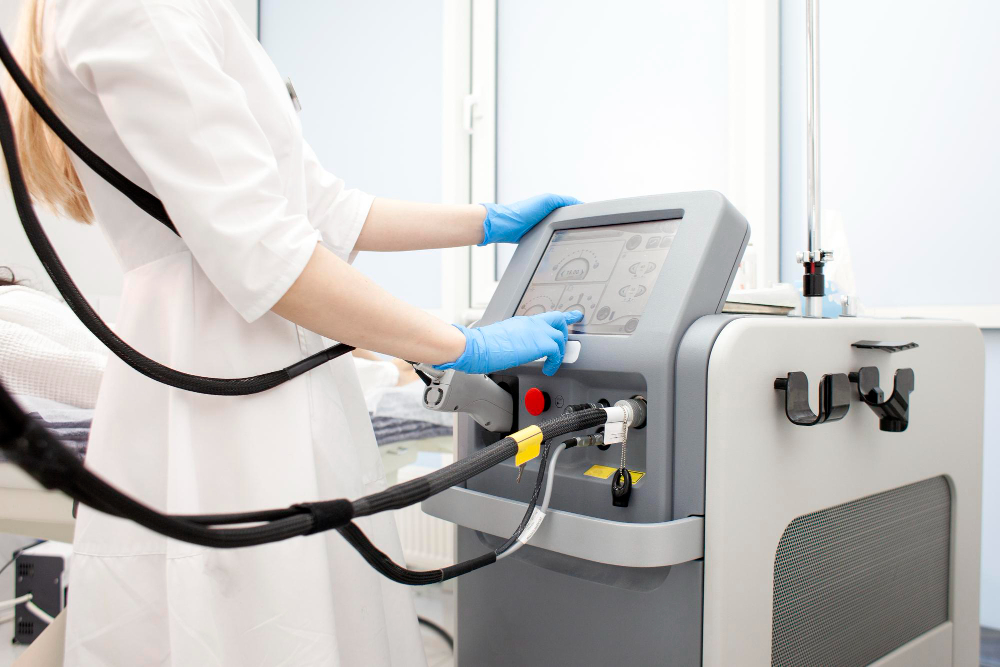
Matching the correct YAG laser shutters or protective components to the specific laser in use starts with knowing exactly what separates these two technologies. Alexandrite YAG laser systems represent two of the most common solid-state laser platforms used across medical, industrial, and research settings, yet the two operate on different principles.
Alexandrite lasers produce light at a wavelength near 755 nanometers, while Nd:YAG lasers usually operate at 1064 nanometers, sometimes shifted to 532 nanometers through frequency doubling.
That difference in wavelength alone drives most of the practical distinctions between the two systems, from how they interact with target materials to the protective equipment each one requires.
Wavelength and Light Absorption
Alexandrite lasers operate at approximately 755 nanometers, a wavelength closer to the visible spectrum. This wavelength has stronger absorption by melanin and certain pigmented targets than longer wavelengths.
Nd:YAG lasers typically operate at 1064 nanometers. At this wavelength, the beam can penetrate more deeply into tissue or certain materials because it experiences different scattering and absorption behavior near the surface.
This distinction is particularly important in medical applications. Clinicians select a wavelength based on the depth and characteristics of the target, as well as the surrounding tissue they need to avoid affecting.
The wavelength difference also matters in industrial applications. Each laser interacts differently with metals, coatings, and composite materials. Those differences can affect the optical density specifications required for shutters, filters, and other protective components installed in the beam path.
Target Material and Chromophore Interaction
Alexandrite lasers have strong absorption characteristics for melanin, making them a common choice for procedures involving pigmented structures near the skin’s surface.
Nd:YAG lasers interact less strongly with melanin at 1064 nanometers. Depending on the application, they can interact effectively with certain synthetic materials, industrial coatings, and deeper biological structures. These differences in target interaction also matter in research and manufacturing environments.
A facility selecting a laser for a specific material-processing task needs to consider the material’s absorption characteristics alongside the laser wavelength. Selecting a wavelength that does not interact efficiently with the intended target can reduce process efficiency, even when the system has substantial output power.
Common Applications Across Industries
Alexandrite lasers appear frequently in dermatology and cosmetic procedures, particularly those involving pigmented lesions or hair removal, where the shorter wavelength provides an advantage.
Nd:YAG lasers show up across a much broader range of applications, including surgical procedures, industrial cutting, marking, and laser welding, where the longer wavelength and higher achievable power levels suit deeper material penetration and structural bonding work.
This breadth of application means facilities running Nd:YAG systems frequently deal with a wider range of power levels and operating modes than a typical alexandrite setup, which affects everything from enclosure design to the response speed required from a beam shutter.
Pulse Structure and Delivery Method
Alexandrite lasers commonly operate in pulsed modes, with pulse durations selected for specific target characteristics. Nd:YAG systems can operate in either pulsed or continuous-wave configurations, depending on their intended application.
Continuous-wave Nd:YAG output is frequently used for industrial processes such as welding and cutting. It creates a sustained exposure hazard that differs from the short-duration, high-peak-power pulses associated with many alexandrite applications.
That operating distinction directly affects shutter selection.
A shutter designed to interrupt continuous laser output has different performance requirements from equipment used with a pulsed system. The shutter must match the actual operating pattern of the laser. Selecting equipment without considering pulse duration, repetition rate, output power, and operating mode can create a mismatch between the protective device and the hazard it needs to control.
Looking at the broader range of types of lasers and their typical pulse behavior helps explain why this distinction matters so much in safety planning.
Safety Equipment and Shutter Requirements
Alexandrite and Nd:YAG lasers operate at different wavelengths, so the optical density required from a protective shutter or filter can differ even when the two systems have similar output power.
A shutter with strong attenuation at 1064 nanometers does not automatically deliver equivalent protection at 755 nanometers. Facilities operating both laser types need separately verified performance for each wavelength rather than assuming one generic protective component works equally well across both systems.
Response speed can also vary in importance depending on the laser platform and application.
Continuous-wave Nd:YAG systems used for welding or cutting can benefit from shutters designed for rapid beam interruption during maintenance and alignment. Pulsed alexandrite systems, meanwhile, require components capable of handling repeated high-peak-power pulses without unacceptable performance degradation over time.
Choosing the Right Protection for Your Laser Investment
Investing in the wrong safety equipment for a laser system costs more than the price of the mismatched component.
A shutter or filter that does not match the exact wavelength and pulse characteristics of an alexandrite or Nd:YAG system leaves a facility exposed to real risk while creating a false sense of security that the equipment is doing its job.
We have spent over 35 years manufacturing shutters and optical components built around the specific demands of different laser platforms, including both alexandrite and Nd:YAG systems.
Every product we build at NM Laser Products is made in the USA and specified to match the exact wavelength and operating mode of the laser it protects, rather than sold as a one-size-fits-all solution.
When a facility runs multiple laser types, we help identify exactly what separates their protection needs from one system to the next, so the investment in safety equipment matches the actual risk profile of each laser on the floor.
If you have any questions about NM Laser Products, feel free to get in touch with our team.
Frequently Asked Questions
Can the same shutter work for both alexandrite and Nd:YAG lasers?
Generally not without separate verification. Optical density ratings are wavelength-specific, so a shutter needs confirmed performance at both 755 and 1064 nanometers before it can be considered safe for use across both laser types.
Which laser type generally requires more powerful safety equipment?
This depends more on output power and operating mode than on the laser type itself.
A high-power continuous-wave Nd:YAG system used for welding typically demands stronger containment than a lower-power pulsed alexandrite system, but exceptions exist depending on the specific configuration.
Do alexandrite and Nd:YAG lasers require different training for operators?
Operator training should reflect the specific wavelength, power level, and application of the laser in use, since the hazard profile and appropriate protective measures differ enough between the two platforms to warrant separate, system-specific instruction.
Related Blogs
Understanding OD (Optical Density) In Laser Safety Protocols
Quick Summary Optical density ratings determine whether a piece of...
Read more
Understanding Long-Pulsed Nd:YAG Laser Technology
Quick Summary Pulse duration significantly influences how a laser ...
Read more
Nd:YAG Lasers Explained: How They Work And Their Practical Uses
Quick Summary This type of laser combines a neodymium-doped crysta...
Read more