Q-Switch Laser Vs. CO2 Laser: Choosing The Right Option
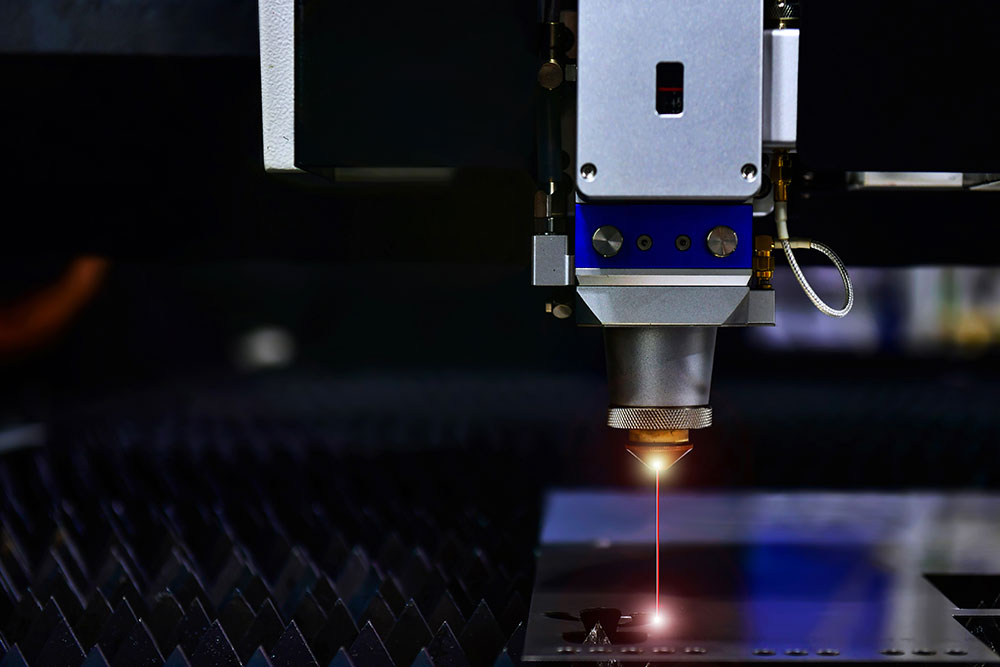
Selecting the right laser type for a professional system is rarely a simple decision. Engineers and system designers working across semiconductor processing, medical device manufacturing, and scientific instrumentation regularly weigh the tradeoffs between laser technologies.
Two that come up often in that conversation are Q-switched lasers and CO2 lasers. Understanding how each one works and where each one fits makes a significant difference in system performance and long-term reliability.
Q Switch Laser Vs. CO2 Laser: How Each One Works
Before getting into applications, it helps to understand the fundamental difference in how these two laser types deliver energy.
A Q-switched laser works by storing energy in a gain medium, typically a crystal such as Nd:YAG. It then releases it all at once in a single, concentrated burst. The “Q” refers to the quality factor of the optical cavity.
A switching element suppresses lasing until enough energy has built up. It then opens suddenly, releasing a pulse with extremely high peak power in a matter of nanoseconds. The result is a brief but incredibly intense burst of energy that can interact with materials at a level impossible to achieve with continuous output.
CO2 lasers operate on an entirely different principle. A gas mixture, primarily carbon dioxide combined with nitrogen and helium, is electrically stimulated to produce a beam at a wavelength of around 10.6 micrometers. This falls in the infrared spectrum. CO2 systems typically operate in continuous-wave or controlled-pulse mode, delivering a sustained, steady stream of energy rather than rapid, concentrated bursts.
The distinction matters because the way energy is delivered determines what a laser can and cannot do in a given application.
At NM Laser Products, our laser shutters and optical beam shutters work across both laser types. Configurations match the power levels, pulse characteristics, and wavelengths involved in each.
Wavelength, Material Interaction, and Why It Matters
Wavelength is one of the most important factors in any laser selection decision, and the gap between Q-switched and CO2 systems is substantial.
Most Q-switched lasers operate at 1064 nm in the near-infrared, with harmonic wavelengths at 532 nm, 355 nm, and 266 nm. These shorter wavelengths interact efficiently with metals, semiconductors, and a wide range of engineered materials. The short pulses also minimize the heat-affected zone around the processing area, which is key when working with precision components where thermal damage is not acceptable.
CO2 lasers emit at approximately 10,600 nm, deep in the infrared. At this wavelength, organic and non-metallic materials absorb energy very effectively. Plastics, polymers, glass, ceramics, and similar substrates respond well to CO2 processing. On the other hand, bare metals largely reflect light at 10.6 microns. It limits CO2’s effectiveness in metal applications without specialized coatings or setups.
This is why material type is often the starting point for any laser selection conversation. The laser does not define the application. The application and its materials define the laser.
Where Q-Switch Lasers Tend to Perform Best
Q-switched systems are a natural fit for work that requires high peak intensity and minimal thermal spread. Common application areas include:
- Micromachining: Creating fine features, grooves, or cuts at micron-level precision on semiconductors, PCBs, and advanced materials
- Laser marking and engraving: High-contrast, permanent marks on metals and engineered substrates
- Ablation: Controlled material removal with a tightly defined affected area
- Spectroscopy and scientific instrumentation: Applications where pulse timing, energy per pulse, and repeatability are all tightly controlled
- Semiconductor capital equipment: Wafer scribing, thin-film processing, and other high-precision manufacturing steps
The high peak power of Q-switched pulses also enables harmonic generation, allowing the same laser platform to operate at UV wavelengths for applications where photon energy needs to interact directly with molecular bonds rather than just heating a surface.
One important consideration in Q-switched systems is shutter selection. The high energy per pulse places real demands on shutter materials and design. Standard blade materials can experience ablation even at relatively modest average power levels. Our Q-switched laser shutters are engineered with dielectric optics and appropriate damage thresholds to reliably withstand these conditions over the long term.
Where CO2 Lasers Tend to Perform Best
CO2 lasers have their own well-established strengths, particularly in applications involving non-metallic materials and processes where sustained energy delivery is beneficial.
Key areas where CO2 systems are commonly used:
- Cutting and engraving non-metals: Plastics, acrylics, wood, ceramics, and glass all absorb the 10.6-micron wavelength efficiently
- Surface treatment and texturing: The sustained beam profile is useful for controlled surface modification
- Industrial manufacturing: CO2 systems are widely used in automotive, aerospace, and general manufacturing for cutting and material processing
- Medical device manufacturing: Certain medical-grade polymers and materials are well-suited to CO2 processing
CO2 lasers can also operate at high average power levels, making them practical for throughput-intensive applications where speed and depth of cut matter more than microscale precision.
Shutter requirements for CO2 systems differ from Q-switched setups. The longer wavelength requires optics and blade materials that effectively absorb or redirect 10.6-micron radiation. Our CO2 laser shutters are configured specifically for this wavelength range, with appropriate thermal handling built into the design.
Fractional CO2 Laser Vs. Q Switch Laser: A Brief Note
This comparison occasionally comes up in discussions around laser system design, particularly in medical laser manufacturing. Fractional CO2 systems deliver energy in a pattern of microbeams, creating controlled treatment zones across a surface.
Q-switched systems interact with targets through a different mechanism entirely, relying on photoacoustic or photomechanical effects rather than thermal buildup.
The two are not direct competitors in most professional system contexts. Selection comes down to the specific mechanism of action required by the application.
Making the Right Call for Your Laser System
There is no universal answer when comparing a Q-switch laser vs. a CO2 laser. The better question is always: what does the application actually require? Material type, required precision, pulse characteristics, thermal sensitivity, and system integration all factor into the decision.
Beam control is a common requirement across both laser types. Regardless of the technology a system uses, a well-designed shutter is part of what enables the system to operate safely and accurately. Contact our team if you have questions about shutter selection for your specific laser configuration.
Related Blogs
Understanding OD (Optical Density) In Laser Safety Protocols
Quick Summary Optical density ratings determine whether a piece of...
Read more
Understanding Long-Pulsed Nd:YAG Laser Technology
Quick Summary Pulse duration significantly influences how a laser ...
Read more
Nd:YAG Lasers Explained: How They Work And Their Practical Uses
Quick Summary This type of laser combines a neodymium-doped crysta...
Read more