A Guide To OSHA Laser Safety Standards

Quick Summary
OSHA laser safety obligations are less straightforward than a single dedicated standard might suggest, because OSHA addresses laser hazards primarily through the General Duty Clause and referenced technical guidance rather than a standalone laser regulation. This page covers how OSHA approaches laser safety, what the key requirements are in practice, what OSHA laser safety training should include, and how engineering controls like safety shutters support compliance across different laser classes.
For employers operating laser equipment in industrial or laboratory settings, laser safety is not optional, and getting it right requires more than posting a warning sign on the door. OSHA laser safety obligations apply across a wide range of workplaces, but the regulatory framework is less straightforward than it might appear.
Unlike some workplace hazards that are covered by a specific OSHA standard with clearly enumerated requirements, laser safety in the United States is addressed through a combination of general duty obligations, referenced external standards, and established industry practice.
How OSHA Addresses Laser Safety
OSHA does not have a single, dedicated laser safety standard. The primary regulatory mechanism for laser safety in the workplace is the General Duty Clause of the Occupational Safety and Health Act, which requires employers to provide a workplace free from recognized hazards that are likely to cause death or serious physical harm.
In its technical guidance documents, OSHA references ANSI Z136.1, the American National Standard for Safe Use of Lasers, as the recognized technical authority for laser safety practice. While ANSI Z136.1 is not itself a federal regulation, demonstrating compliance with it is widely accepted as evidence of meeting the General Duty Clause obligation for laser-related hazards. For most practical purposes, ANSI Z136.1 is the standard that laser safety programs in the United States are built around.
Key Requirements in Practice
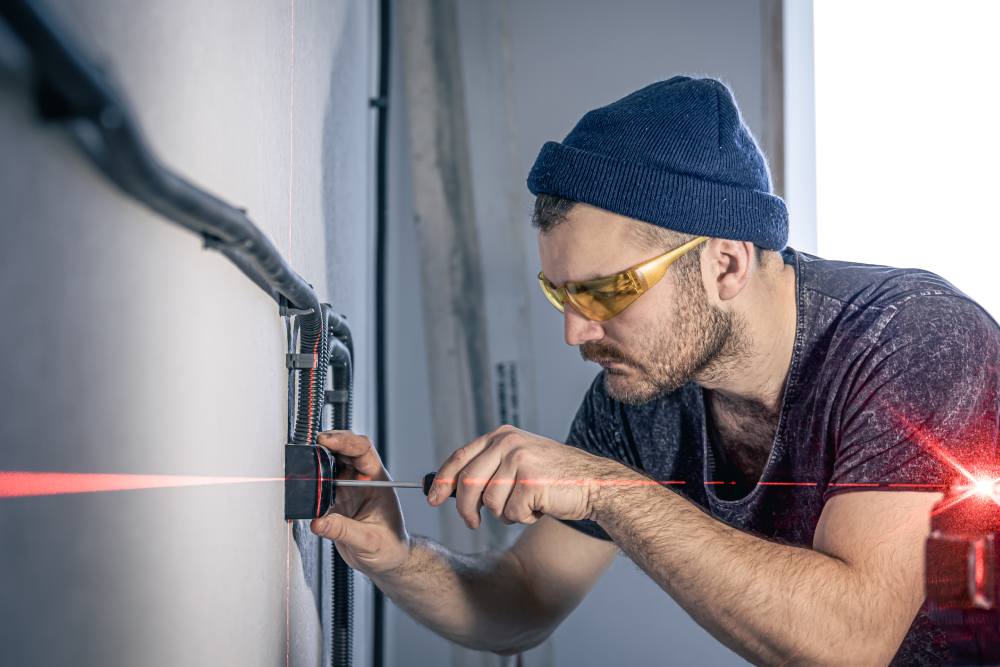
Although there is no single OSHA laser safety regulation with a numbered checklist, the practical requirements that apply to most laser-using workplaces are well-established through OSHA guidance and ANSI Z136.1.
Hazard assessment is the starting point. Before deploying laser equipment, employers should assess the laser’s classification, the potential exposure pathways, and the controls needed to reduce risk. This assessment should account for the direct beam, specular reflections, diffuse reflections where relevant, and secondary hazards such as laser-generated air contaminants from material processing.
Engineering controls are the first line of defense. For class 3B and class 4 lasers, these include beam enclosures, interlocks on access panels, safety laser shutters, and beam stops. Engineering controls reduce or eliminate accessible emission during normal operation and should be designed to fail safe, meaning that a component failure results in the beam being blocked rather than exposed.
Administrative controls include standard operating procedures, restricted access to laser areas, and laser warning signs at controlled area boundaries. Access should be limited to personnel who have received appropriate training and are authorized to work in the laser controlled area.
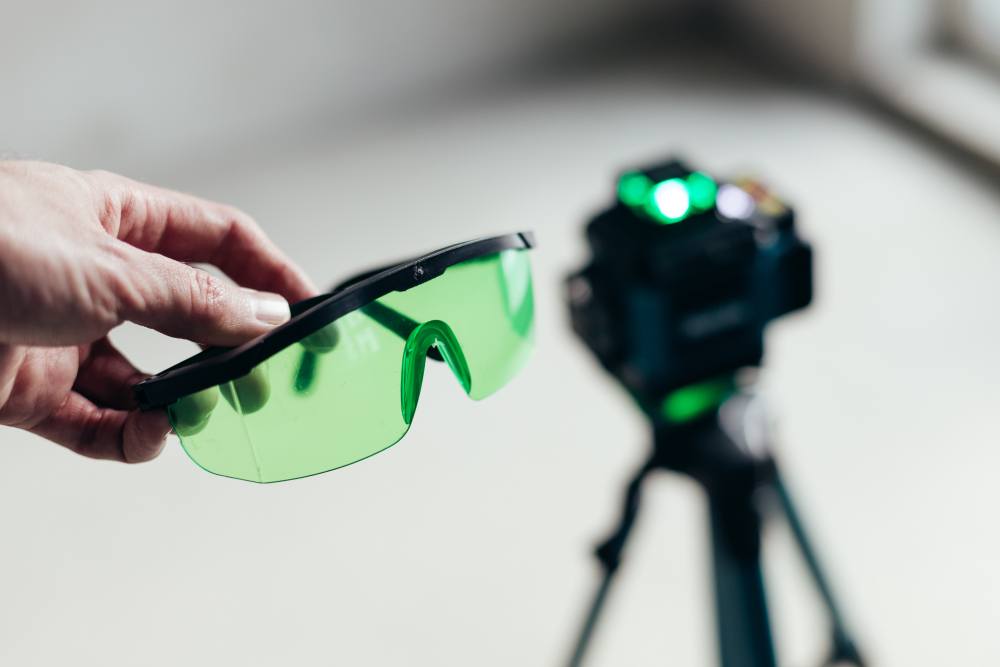
Personal protective equipment, primarily laser safety eyewear rated for the specific wavelength and power level, is required when engineering and administrative controls do not adequately reduce exposure risk on their own.
OSHA Laser Safety Training
OSHA laser safety training requirements vary by laser class and the nature of the work being performed. Personnel working with or near class 1 and class 2 lasers need basic awareness training covering what lasers are, how they are classified, and the importance of not defeating enclosures or interlocks. This level of training is relatively brief but should be documented.
For class 3B and class 4 lasers, OSHA laser safety training needs to be more comprehensive. It should cover the physiological effects of laser radiation on the eye and skin, the meaning of laser classification and warning labels, the specific controls in place at the facility, the correct use and limitations of laser safety eyewear, emergency procedures for accidental exposure, and the reporting process for incidents and near-misses.
Training should be completed before a worker begins working with or near the relevant laser equipment, and refreshed when new equipment is introduced, when procedures change significantly, or following an incident. Annual refresher training is a common best practice for facilities operating class 3B or class 4 systems.
The Laser Safety Officer Role
For facilities operating class 3B or class 4 lasers, ANSI Z136.1 requires the appointment of a Laser Safety Officer. The LSO is responsible for overseeing the facility’s laser safety program, conducting or reviewing hazard assessments, approving standard operating procedures, and verifying that engineering controls and personal protective equipment are appropriate and properly maintained.
The LSO role requires a combination of technical knowledge about laser physics and safety standards, and practical familiarity with the specific equipment and processes used at the facility. In smaller organizations, the LSO role may be combined with other engineering or safety responsibilities.
Engineering Controls and Component Reliability
The effectiveness of engineering controls depends entirely on the reliability of the components involved. A laser interlock shutter that fails to close reliably on a safety signal, or that wears out before the end of its expected service life, creates a gap in the engineering control layer that training and procedures cannot compensate for.
When specifying laser safety components for an OSHA-compliant system, service life, failure mode, and position verification capability all matter. A fail-safe shutter that closes on power loss, includes independent position sensors that physically confirm blade state, and is rated for the optical power level and wavelength of the laser it protects is not just good engineering practice. It is what an effective safety program requires.
Components That Support Your Compliance Program
NM Laser Products manufactures fail-safe laser safety shutters rated for optical power up to 300 watts, with independent position sensors, USA manufacturing, and service lives up to 2 billion cycles.
With a track record in semiconductor capital equipment, U.S. Department of Energy safety labs, and over 35 years of engineering experience, our products are built for the reliability that OSHA-compliant laser safety programs depend on. Contact our team to discuss the right components for your facility.
FAQs
Does OSHA have a specific laser safety standard?
OSHA does not have a dedicated laser safety standard. Laser safety obligations are addressed primarily through the General Duty Clause, with ANSI Z136.1 referenced as the recognized technical standard for safe laser use in the workplace. Demonstrating compliance with ANSI Z136.1 is generally accepted as meeting the General Duty Clause obligation for laser hazards.
Which laser classes require formal OSHA laser safety training?
All personnel working with or near lasers should receive some level of awareness training. Comprehensive formal training covering physiological effects, controls, eyewear, and emergency procedures is required for those working with class 3B and class 4 lasers, where direct and reflected beam exposure can cause serious injury.
How often should laser safety training be refreshed?
Training should be refreshed when new laser equipment is introduced, when procedures change significantly, or following an incident or near-miss. Annual refresher training is standard practice for facilities operating class 3B or class 4 laser systems.
Related Blogs
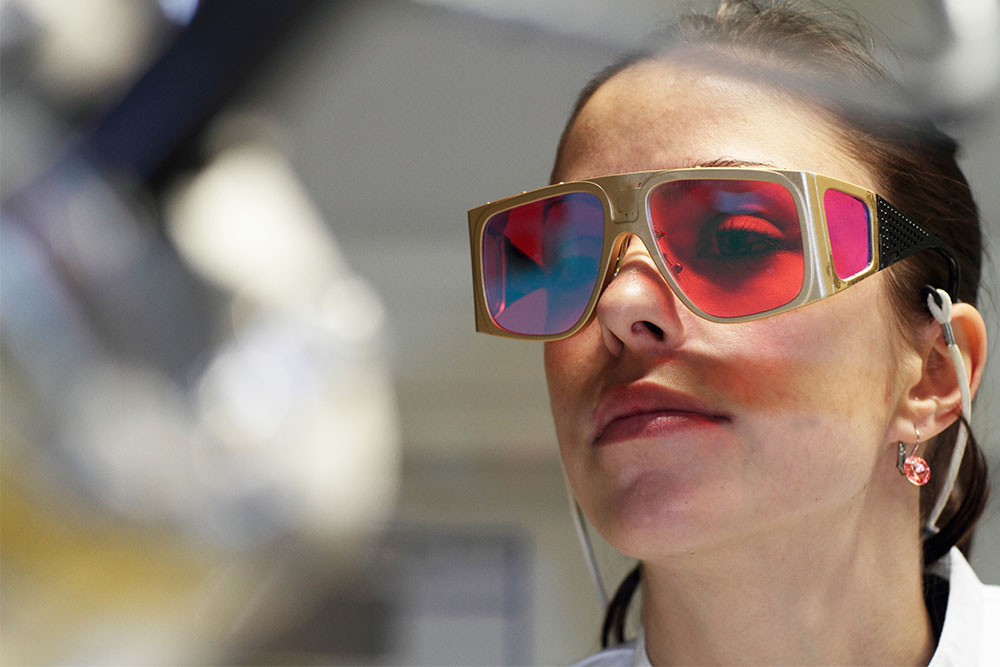
Understanding OD (Optical Density) In Laser Safety Protocols
Quick Summary Optical density ratings determine whether a piece of...
Read more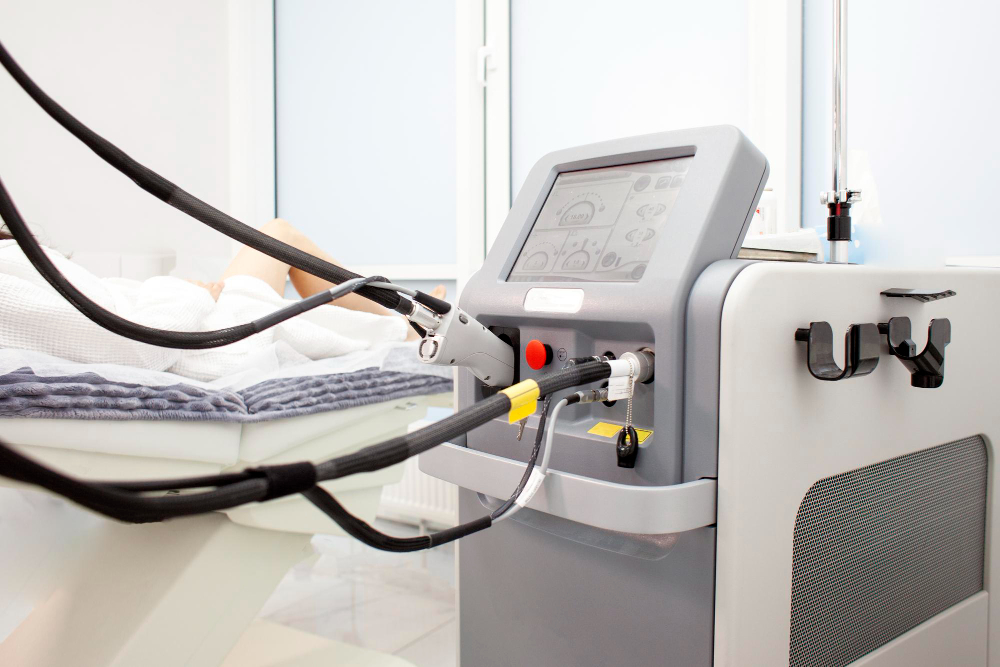
Understanding Long-Pulsed Nd:YAG Laser Technology
Quick Summary Pulse duration significantly influences how a laser ...
Read more
Nd:YAG Lasers Explained: How They Work And Their Practical Uses
Quick Summary This type of laser combines a neodymium-doped crysta...
Read more