An Overview Of Laser Welding Safety Practices
Quick Summary
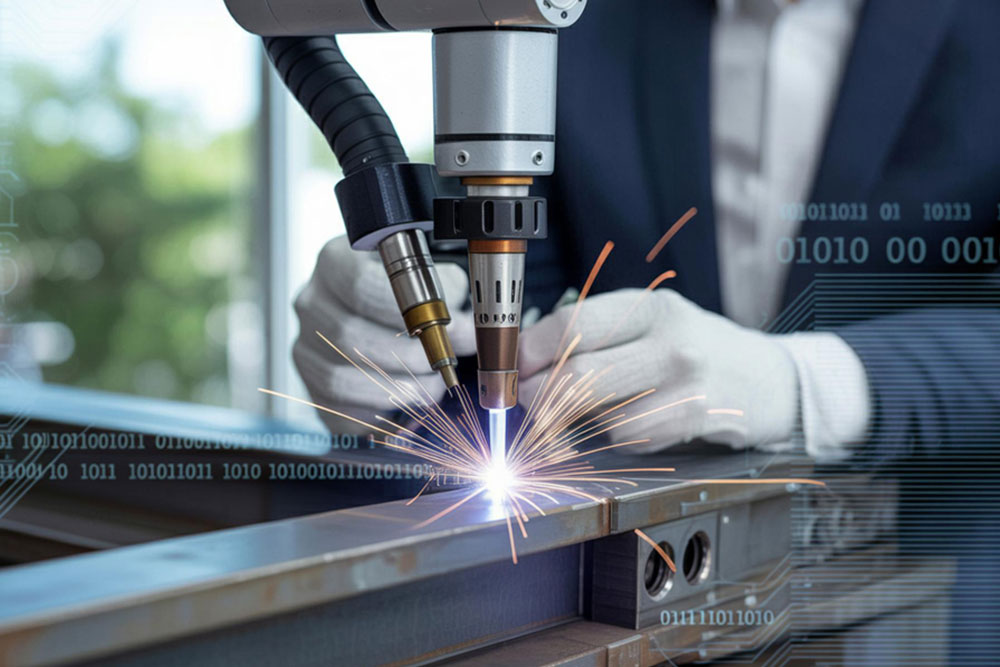
Laser welding introduces hazards that differ significantly from traditional welding methods. These include invisible infrared radiation, hazardous specular reflections, and fumes generated during processing. These risks require engineered controls and carefully planned procedures rather than relying on instinct or operator reaction alone.
Shutters, enclosures, and interlocks selected early in a project can protect operators from Class 4 laser exposure while helping production remain efficient.
Laser welding safety starts long before the first weld is made, built into equipment selection, workspace design, and operator training rather than added on afterward as an afterthought.
Facilities adopting laser welding for the first time typically underestimate how different the hazard profile looks compared to traditional arc or resistance welding methods. That gap in understanding is where most preventable incidents originate.
Fiber and solid-state laser welding systems typically run at Class 4 power levels, producing beams capable of causing severe eye and skin injury from direct exposure or from a stray reflection off a metal surface.
Unlike traditional welding arcs, which give off visible light that prompts an instinctive blink reflex, many industrial laser wavelengths sit in the infrared range and remain invisible to the naked eye.
That invisibility removes the natural warning signal a worker would otherwise rely on, which makes engineered safety controls the primary line of defense rather than human reaction.
Why Laser Welding Carries Distinct Hazards
Laser welding hazards fall into several categories, and each requires appropriate controls.
Direct beam exposure presents the most obvious danger. Specular reflections from the workpiece, fixtures, tooling, or other reflective surfaces can also redirect laser energy toward an unintended location.
Fumes and airborne particulates create another important concern during laser processing. The concentrated heat at the weld point can vaporize metal, coatings, and other materials, producing airborne byproducts that require effective local exhaust and ventilation.
Skin exposure also deserves attention when operators or technicians work close to the welding area during setup, inspection, or troubleshooting.
Under certain conditions, high-power laser radiation can cause serious burns, including through some clothing materials. Physical barriers, controlled access, and appropriate working distances therefore matter for skin protection as well as eye protection.
Engineering Controls for Laser Welding Cells
A properly designed laser welding cell uses multiple engineering controls rather than depending on one protective measure.
A full enclosure around the weld zone contains hazardous radiation during normal operation. Interlocked doors and access panels can interrupt laser emission when an enclosure opening is accessed.
Viewing windows integrated into an enclosure must have an optical density rating appropriate for the welding laser’s specific wavelength and power. A window that looks opaque or substantial may still fail to provide adequate protection if its optical properties do not match the laser being used.
Beam delivery components, including fiber runs and optical heads, also require physical protection against accidental damage. A damaged component or disrupted beam path can redirect laser energy outside its intended route.
Laser shutters and optical beam shutters installed at strategic points in the beam path give technicians a fast method for interrupting laser output during maintenance, alignment, fiber replacement, or other service procedures.
This capability becomes particularly valuable in production environments where downtime carries significant costs. Technicians may need controlled access to different parts of the beam path multiple times during a shift, making rapid beam interruption more practical than repeatedly shutting down the entire system.
Shutters and Access Control During Maintenance
Maintenance and setup periods create some of the highest-risk moments in laser welding operations, since technicians frequently need direct access to the beam path for alignment, fiber inspection, or optic cleaning.
Relying on the main system power switch alone is slow and impractical for procedures that require repeated on-off cycling throughout a maintenance window.
A safety laser shutter positioned near the laser source solves this problem directly, closing the beam path in milliseconds without shutting down the laser’s internal systems or forcing a lengthy restart sequence.
This distinction matters more than it might first appear. Fiber lasers in particular can take time to stabilize after a full power cycle. Technicians working through multiple short maintenance tasks benefit from a shutter that lets them interrupt and restore the beam path quickly and predictably.
Shutters also protect sensitive optics and sensors positioned downstream in the beam path from stray exposure during setup. This extends the service life of components that would otherwise degrade from repeated unintended exposure during calibration work.
Training, PPE, and Administrative Controls
Engineering controls carry the greatest responsibility in a laser welding safety strategy, but administrative controls and personal protective equipment remain important parts of the overall system.
Operators need training that reflects the wavelength and power class of the equipment they actually use. Generic laser safety instruction may not address the specific hazards associated with a particular welding cell, beam path, or operating procedure.
Protective eyewear rated for the exact wavelength must be used whenever a procedure could expose the beam path. Skin protection, including appropriate flame-resistant clothing and process-compatible gloves, adds another layer of protection around the welding area.
These measures do not replace physical containment or shutter systems. They address the remaining risks that arise when workers must approach the weld zone for legitimate setup, maintenance, inspection, or operational tasks.
The Case for Acting Now
Laser welding adoption continues to grow across automotive, aerospace, medical device, and electronics manufacturing. Facilities bringing new laser welding cells online face a narrow window to get safety infrastructure right before production ramps up.
Retrofitting shutters, enclosures, or interlocks into an already-running production line costs significantly more in downtime and engineering time than specifying the correct components during initial installation.
Waiting until after an incident, a near miss, or a failed safety audit to close gaps in a laser welding cell puts a facility in a reactive position at the worst possible time, typically while under pressure from regulators, insurers, or corporate safety teams all at once.
Building safety into a project from day one, before equipment arrives on the floor, keeps a facility ahead of that pressure instead of scrambling to catch up.
We have spent over 35 years designing and manufacturing shutters and optical components for laser systems, including the high-power fiber and solid-state lasers used in modern welding cells.
Every shutter we build is made in the USA and tested against the real demands of production environments, not just a baseline compliance standard.
When a facility comes to us early in a project, before equipment is installed and production schedules are locked in, we can specify shutters and custom components that fit the exact wavelength, speed, and mounting requirements of that specific welding cell.
That early involvement makes a measurable difference. Facilities that loop us in during the planning phase avoid the rework, delays, and compliance scrambles that come from retrofitting safety components after the fact.
NM Laser Products has built its reputation on getting this right the first time, for customers who cannot afford production downtime or safety shortcuts.
If you have any questions about NM Laser Products, don’t hesitate to touch base with our team.
Frequently Asked Questions
Does laser welding require a different safety classification than laser cutting or marking?
The safety classification depends on the specific laser’s wavelength and output power rather than the process itself, so a laser welding system and a laser cutting system running similar power levels would carry comparable classification requirements.
Can existing welding cells be upgraded with better beam containment without a full rebuild?
In most cases, yes. Shutters, enclosure panels, and interlocks can be added to an existing cell layout, particularly when the beam path and mounting points are documented ahead of the upgrade.
How often should laser welding safety equipment be tested?
Interlocks, shutters, and enclosure integrity should be checked on a regular schedule as part of routine equipment maintenance, with additional checks after any modification to the beam path or optical setup.
Related Blogs
Why You Should Consider An LCD Optical Shutter
Quick Summary Liquid crystal shutters block and transmit light thr...
Read more
Why Choose A CO2 Laser Shutter Manufacturer For Your Business Needs
Quick Summary Selecting a manufacturer for CO2 laser shutter compo...
Read more
Why Adjusting The Diagonal On Your CO2 Laser Machine Matters
Quick Summary How well a CO2 laser machine's beam tracks acro...
Read more