Exploring Laser Welding: How It Works And Its Impact On Industries
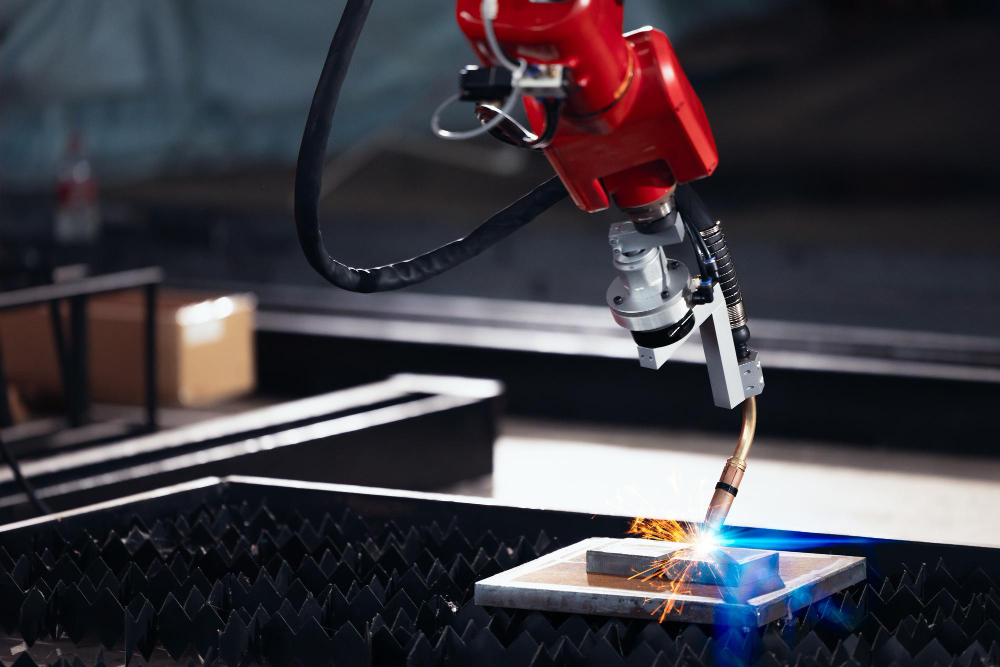
Laser welding continues to reshape manufacturing by offering high strength joins with minimal heat distortion. This article explains how the process works, where it is used, and why system components matter for reliable performance.
Industrial laser welding relies on a concentrated beam of light to fuse materials at precise points. The energy is delivered in a controlled manner, allowing materials to melt and solidify into a strong joint without excessive surrounding damage.
Systems that incorporate laser shutters and optical beam shutters depend on accurate timing to regulate beam exposure during welding cycles. This ensures that energy delivery remains consistent across repeated operations in production environments.
In advanced configurations using OEM and custom lasers, welding systems are designed to meet specific material and performance requirements. Each setup is designed to meet production goals, from joint strength to cycle speed.
Reliable performance also depends on precise alignment, beam properties, and polarization information. These all work to determine how energy interacts with the weld zone and how consistently results can be achieved across different materials.
The Process Behind Laser Welding
Laser welding works by focusing a high-intensity beam onto a small area where two materials meet. The localized heat causes the materials to melt and fuse together.
Once the beam is removed, the molten material cools and solidifies, forming a strong bond. This process creates narrow welds with minimal distortion compared to traditional methods.
The level of control available allows engineers to adjust depth, width, and penetration based on application needs. This flexibility makes laser welding suitable for both delicate and heavy-duty tasks.
A properly configured industrial laser welding machine means that energy delivery can remain stable throughout the process.
Advantages Over Traditional Welding Methods
Laser welding offers several advantages compared to conventional welding techniques. One of the most notable benefits is reduced heat-affected zones, which helps preserve material integrity.
Because the beam is highly focused, surrounding areas experience less thermal stress. This reduces the risk of warping or structural changes in the base material.
Speed is another advantage. Laser systems can complete welds quickly, which supports high-volume production environments.
The process also requires minimal post-processing, as welds are typically clean and precise.
Material Compatibility and Flexibility
Laser welding can be applied to numerous materials, including metals, alloys, and certain polymers. Each material responds differently to laser energy, requiring careful parameter selection.
Metals such as stainless steel and aluminum are commonly used due to their predictable response to laser energy. Dissimilar material welding is also possible in certain cases with proper configuration.
Flexibility in material handling allows manufacturers to expand design possibilities without changing core production systems.
Beam Control in Welding Quality
Beam control plays a big part in determining weld quality. Spot size, intensity distribution, and focus position all influence how energy is applied.
A tightly focused beam produces deep, narrow welds, while a broader beam creates wider joints with different structural characteristics.
Polarization can also influence absorption rates. Adjusting beam orientation helps optimize energy transfer for specific materials.
These variables must be carefully managed to maintain consistent weld quality across production runs.
Automation and Production Efficiency
Modern manufacturing environments often work laser welding into automated systems. Robotics and motion control systems guide the beam with high precision.
Automation reduces variability and increases production speed. This allows manufacturers to maintain consistent output while minimizing manual intervention.
A well-designed industrial laser welding machine can operate continuously in high-demand environments, supporting large-scale production goals.
Integration with digital controls also allows real-time adjustments to welding parameters.
Industrial Applications of Laser Welding
Laser welding is used across multiple industries. In automotive manufacturing, it is used for body assembly, battery production, and structural components.
In aerospace, it supports the creation of lightweight yet strong joints that must withstand extreme conditions.
Medical device manufacturing also relies on laser welding for small, precise components that require high levels of cleanliness and accuracy.
Electronics production benefits from the process due to its ability to create fine, controlled connections without damaging surrounding components.
The versatility of laser welding tools makes them perfect for both large-scale and micro-scale applications.
Equipment Considerations in Welding Systems
The performance of a welding system depends heavily on its components. Optical stability, energy control, and mechanical durability all contribute to system reliability.
Proper selection of materials and components helps guarantee consistent operation over time. This is especially important in environments with continuous production demands.
Maintenance requirements are generally lower compared to traditional welding systems, but regular inspection helps maintain long-term performance.
Durable design supports reduced downtime and improved production efficiency.
Impact on Modern Manufacturing
Laser welding has changed how manufacturers approach joining processes. Its precision and speed allow for more efficient production workflows.
Reduced material waste and lower post-processing requirements contribute to cost savings. These benefits make laser welding an attractive option for many industries.
As technology continues to evolve, laser welding is expected to play an even bigger part in advanced manufacturing systems.
Its ability to deliver consistent results across many applications ensures continued adoption across global industries.
Reliable Welding Solutions for Demanding Applications
We work with manufacturers who rely on consistent laser performance in high-demand environments. Our experience allows us to support applications where precision and reliability are essential.
We design and manufacture laser shutters and optical beam shutters that provide dependable control over beam exposure during welding processes. Our products are made in the United States and built for long cycle life, high optical power handling, and stable operation.
We also support OEM and custom lasers with solutions made to specific welding requirements. Our focus is on delivering components that maintain beam control accuracy and support long-term system reliability.
If you have any questions about NM Laser Products, Inc. or need assistance selecting the right shutter for your application, please contact us.
FAQs
What makes laser welding different from traditional welding?
Laser welding uses a focused beam for precise, localized heating, resulting in cleaner and more controlled joints.
Can laser welding join different types of metals?
Yes, in many cases it can, but success depends on material compatibility and system configuration.
Is laser welding suitable for high-volume production?
Yes, it is used in automated manufacturing due to its speed, repeatability, and efficiency.
Related Blogs

7 Benefits Of UV Laser Marking For Sensitive Materials
Quick Summary UV laser marking creates permanent, high-contrast ma...
Read more
A Guide To UV Laser Singulation For Precision Cutting
Quick Summary UV laser singulation uses short, high-energy pulses ...
Read more
Benefits Of CO2 Dental Lasers In Modern Dentistry
Quick Summary CO2 dental lasers cut and coagulate soft tissue at t...
Read more