Class 4 Laser Safety Shutters: What You Need To Know
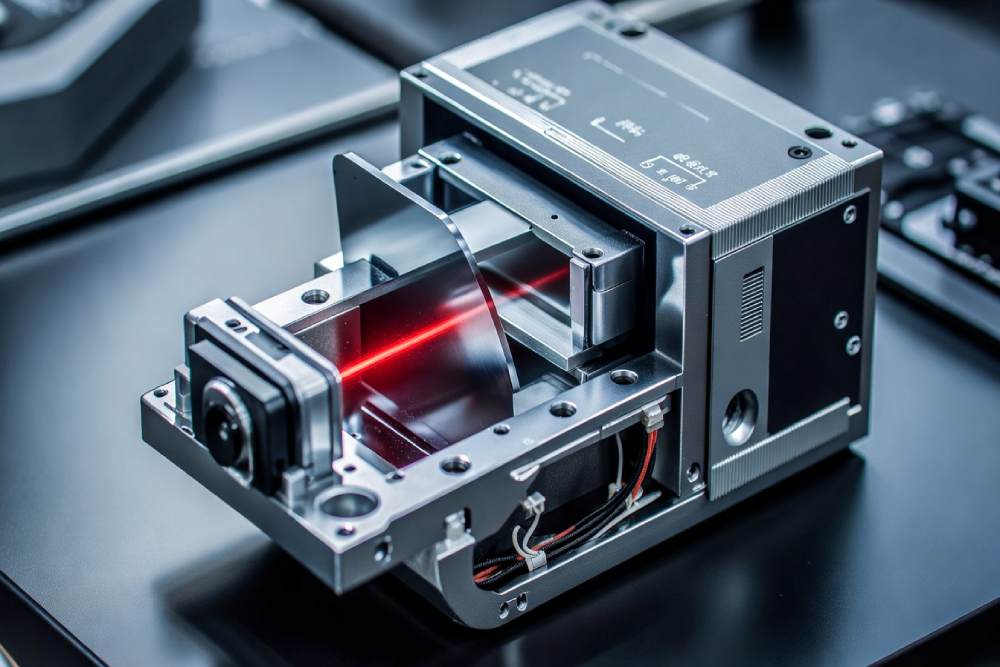
High-power laser systems operate in a space where precision and risk coexist. Class 4 lasers represent the highest hazard category under international standards. They can produce energy levels capable of causing severe eye and skin injury from direct exposure and from diffuse reflections. In these environments, a Class 4 laser safety shutter becomes a key element of system design.
At NM Laser Products, we have spent decades working alongside engineers who design and build advanced laser platforms for industrial, medical, and scientific use. The insights below draw from that experience and from established safety guidance to explain how shutters fit into Class 4 laser systems and why thoughtful integration matters.
Class 4 Laser Safety Shutter Basics
A safety shutter physically blocks the laser beam when emission must stop. Unlike software commands or procedural controls, a shutter interrupts the optical path itself. This direct action carries weight in Class 4 environments where even brief exposure can cause harm.
Class 4 lasers historically exceeded 500 mW of optical power under older classification systems. Modern standards focus on hazard potential rather than power alone, yet the risks remain substantial. Beams may operate outside the visible spectrum, which removes natural blink reflex protection. Diffuse reflections from metal surfaces or optics can still deliver damaging energy.
Mechanical shutters address these risks during system startup, alignment, testing, and maintenance. When a shutter closes, the beam cannot travel downstream regardless of the state of the control software. Engineers often position shutters at key points in the optical train to isolate sections of the system as operating conditions change.
Design considerations extend beyond simple blocking. Actuation speed, repeatability, and thermal load resistance all affect performance. Components selected for Class 4 duty must tolerate sustained exposure without warping or degradation. This is why many systems rely on purpose-built laser shutters and optical beam shutters for high-power applications.
Understanding Laser Classification and Risk
Laser classification exists to communicate hazard potential and guide protective measures. IEC 60825-1 defines classes based on wavelength and accessible emission limits. Class 4 sits at the top of this scale and introduces risks that extend beyond the beam itself.
Accident data highlights how injuries often occur during non-routine activities. Laser alignment work in research labs accounts for a large share of reported eye injuries. Unconfined beams and unexpected reflections increase exposure risk, especially when eyewear selection or fit proves inadequate.
These factors shape how safety controls are implemented. Policies and training play an important role, but engineering controls lay the foundation for reducing risk. Shutters fall into this category because they operate independently of user response. Once triggered, they can act immediately.
Class 4 Laser Safety Regulations and System Design
Class 4 laser safety regulations focus on hazard evaluation and the selection of control measures. Standards such as ANSI Z136 require identification of the nominal hazard zone. This zone defines where beam exposure may exceed the maximum permissible exposure limit.
Once defined, the zone must remain confined. Enclosures, interlocks, and beam blocks all play roles here. Shutters integrate into this framework by preventing beam propagation beyond intended boundaries. Many systems connect shutter actuation to door switches, emergency stops, and fault detection circuits.
Fail-safe behavior carries special importance. A loss of power or control signal should never leave the beam exposed. Normally closed shutter designs meet this expectation because mechanical force keeps the beam blocked unless the system actively commands otherwise.
Regulatory compliance also involves documentation and repeatable performance. A shutter that behaves predictably over millions of cycles simplifies safety validation and audit preparation. Engineers value this consistency because it reduces uncertainty during system certification.
The Role of Class 4 Laser Safety Signs and Physical Controls
Visual warnings signal the presence of a hazard. Class 4 laser safety signs inform personnel about restricted areas and the risk of injury. While signs cannot block a beam, they help set clear expectations for safe behavior.
Physical controls turn those expectations into action. When a shutter closes in response to an interlock, it reinforces the warning shown by the signage. This connection between information and engineering reduces dependence on a perfect human response.
Shared workspaces can benefit from layered protection. Signage defines the boundary, while shutters enforce it at the optical level. Together, they create a safer operating environment without adding procedural complexity.
Integration Inside Enclosures and Automated Systems
Modern laser systems use automation and enclosed designs to reduce risk. Shutters connect with sensors and controllers to create an active layer of safety. Placing them at beam entry and exit points helps prevent light from escaping along unintended paths.
Shutters built for Class 4 applications can react within milliseconds, limiting exposure during fault conditions. Mechanical movement works alongside electronic detection by providing a physical block to the beam.
In the second half of system layouts, engineers often specify optical shutters for precise beam control where timing and positioning affect both safety and process quality. These components handle high optical loads without sacrificing actuation accuracy.
Designing with Safety in Mind from the Beginning
Planning for safety early simplifies the overall system design. When shutters are included from the start, they integrate naturally into optical layouts and control systems. Adding them later often forces compromises in placement or actuation.
Close collaboration between system designers and component specialists helps match shutter performance to the beam. Factors such as wavelength, beam size, and duty cycle all affect selection. This level of coordination leads to cleaner integration and more predictable operation.
Building Safer Class 4 Systems with Purpose
High-power laser systems perform best when safety and performance move forward together. Mechanical beam control offers a dependable foundation in environments with little room for error. Shutters offer immediate protection during normal operation and during unexpected events.
This approach guides our work at NM Laser Products. We design shutters for applications where durability, speed, and precision matter throughout the full system life cycle. Engineers depend on these components to manage risk while maintaining full system capability.
Is your team planning or refining Class 4 laser platforms? A focused discussion around beam control can clarify next steps. Contact our team to explore shutter options suited to your specific application and operating conditions.
Related Blogs
Choosing A High-Power Laser Shutter For Pulsed Applications
Selecting a high-power laser shutter for pulsed applications requir...
Read more
High-Energy Pulsed Laser Shutters: Uses And Benefits
Modern laser systems operate at energy levels where timing mistakes...
Read more
High-Speed Laser Shutters For Microscopy Applications
High-speed laser shutters for microscopy have become a core compone...
Read more