High-Speed Laser Shutters For Microscopy Applications
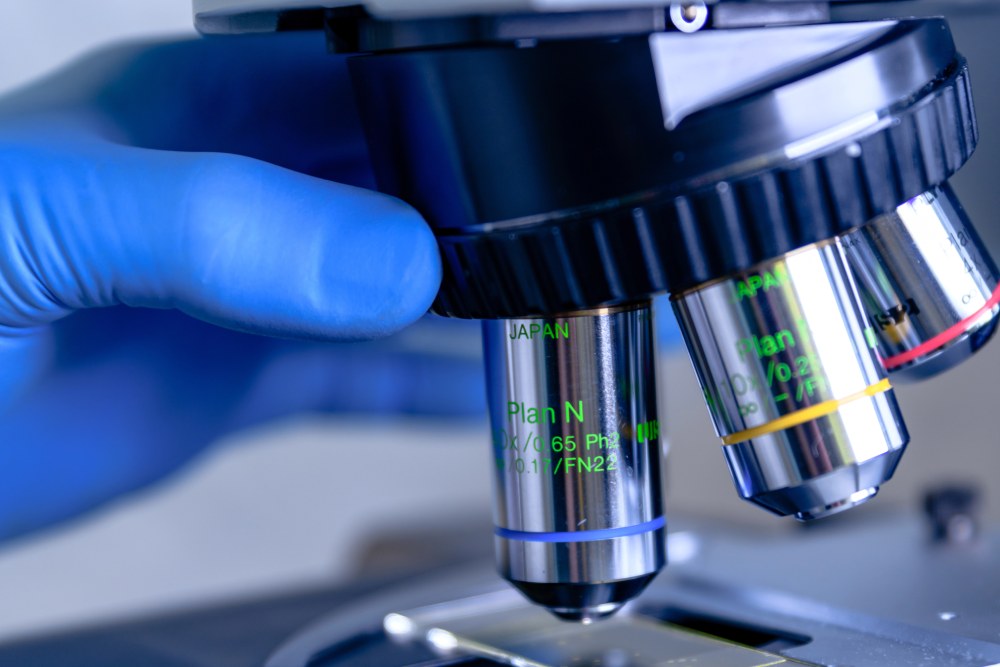
High-speed laser shutters for microscopy have become a core component of modern imaging systems. In these systems, timing accuracy and controlled illumination directly affect experimental outcomes.
Advanced microscopy techniques now operate at speeds and resolutions that require precise coordination between laser sources, detectors, and scanning mechanisms. Light must appear only at the intended moment and disappear just as quickly, especially when working with sensitive biological samples or rapid physical processes.
NM Laser Products has spent more than three decades designing shutter technology for laser and optical systems used in scientific, medical, and industrial environments.
Our experience shapes our understanding of how shutter performance influences real-world microscopy applications, although the technology itself remains the primary focus of this discussion. Recognizing how shutters operate within imaging systems helps clarify their increasing importance across a wide range of research disciplines.
High-Speed Laser Shutter for Microscopy in Modern Imaging
Microscopy has progressed far beyond static imaging. Live-cell analysis, fluorescence techniques, and photo-stimulation rely on tightly timed light delivery to capture transient events. Exposure that lasts even a fraction too long can alter results or damage specimens.
Fast shutters allow microscopes to regulate illumination with precision. Laser light reaches the sample only during active imaging windows, and it is blocked immediately once data capture ends. This timing accuracy reduces unnecessary exposure and allows researchers to repeat experiments with consistent conditions.
Systems designed for fluorescence and confocal microscopy benefit greatly from this approach. Fluorescent dyes and markers degrade under excess light, making controlled exposure essential for meaningful observations. Shutters designed for rapid actuation help synchronize illumination with scanning mirrors and detectors.
Microscopy platforms also vary widely in configuration. Custom optical paths, multiple wavelengths, and compact instrument layouts demand shutter designs that integrate cleanly. This need has driven the development of specialized laser shutters and optical beam shutters engineered specifically for system-level integration.
Speed, Timing, and High Shutter Speed Light Control
Fast imaging places strict requirements on shutter performance. Actuation speed determines how quickly a beam can transition from blocked to open and back again. Exposure windows must remain consistent across countless cycles to maintain reliable data.
High-shutter-speed light control allows microscopes to operate at higher frame rates without introducing unwanted illumination between frames. This capability becomes a must in experiments involving rapid cellular motion, chemical reactions, or neural activity. Laser pulses must match precisely with detection events to capture meaningful information.
Electro-mechanical shutter designs are common in microscopy systems due to their predictable behavior and durability. Actuators, blade geometry, and drive electronics all influence response time. Careful engineering balances speed with long-term reliability, especially in laboratory environments where instruments may run continuously.
Control interfaces also play a role. Many systems rely on TTL triggers or software-based timing sequences. Shutters must respond consistently to these signals to maintain synchronization across the entire imaging platform. Well-designed timing control simplifies system setup and reduces calibration overhead.
Expanding Applications Beyond Imaging
Shutter technology developed for microscopy often extends into related research fields. Optical timing principles apply across laser-based measurement and sensing applications, including spectroscopy and distance measurement systems.
In experimental setups that incorporate a high-speed laser distance sensor, precise pulse timing becomes key. Short, controlled bursts of laser energy allow accurate measurement of distance or material properties. Although these systems differ in purpose from microscopes, both rely on rapid optical control and repeatable timing.
This overlap highlights how shutter performance affects a broad range of laser-driven research tools. Lessons learned from microscopy inform shutter designs for sensing and measurement, and advances in those fields feed back into imaging technology.
Reliability and Customization in Research Environments
Laboratory equipment operates continuously under demanding conditions. During imaging sessions, shutters cycle repeatedly, often for long periods. Mechanical wear, timing drift, or inconsistent motion can disrupt experiments and affect results.
Designs that emphasize durability help reduce these risks. Careful material choices, robust actuator designs, and precise manufacturing support long service life. Testing under real operating conditions confirms that shutters maintain consistent performance over time.
Customization is just as important. Research instruments rarely follow a standard layout. Beam size, wavelength, mounting needs, and control interfaces differ from one application to another. Shutters designed for flexibility can adapt more easily to these variations.
Partnering with Expertise Built for Advanced Imaging
Advanced microscopy depends on optical components engineered for precision and integration. At NM Laser Products, decades of experience guide how shutter technology adapts to research needs.
Our teams developing next-generation imaging systems benefit from working with engineers who understand how timing and reliability can facilitate experimental success.
Contact us today to discuss shutter solutions tailored to your specific microscopy requirements.
Related Blogs
Understanding OD (Optical Density) In Laser Safety Protocols
Quick Summary Optical density ratings determine whether a piece of...
Read more
Understanding Long-Pulsed Nd:YAG Laser Technology
Quick Summary Pulse duration significantly influences how a laser ...
Read more
Nd:YAG Lasers Explained: How They Work And Their Practical Uses
Quick Summary This type of laser combines a neodymium-doped crysta...
Read more