How Laser Imaging Works In Industrial Applications

Answering the question “How does laser imaging work?” opens the door to appreciating one of the most precise and reliable technologies used in modern manufacturing, inspection, and research. Laser imaging systems use focused light to measure, map, or visualize materials with remarkable accuracy.
These systems depend on highly coordinated components (from emitters and detectors to timing mechanisms and optical controls) that translate light reflections into usable data. Industries across aerospace, electronics, and medicine rely on these principles every day to maintain high standards of quality and performance.
The Principles Behind Laser Imaging
Laser imaging involves projecting a beam of coherent light onto a surface and analyzing the reflected or scattered light to extract information. The term “coherent” means that the light waves are aligned in both frequency and phase, allowing for pinpoint focus and minimal dispersion. When this light interacts with a surface, it carries back structural details such as texture, distance, and contour.
This principle makes laser imaging effective for both two-dimensional and three-dimensional measurements. In 2D systems, it records intensity and shape. For 3D systems, the time-of-flight method calculates depth by measuring how long it takes for light to return to the sensor. This time translates the light travel into spatial coordinates, creating detailed surface maps for metrology and defect analysis.
Laser imaging’s accuracy depends on consistent control of the beam. Even slight changes in timing or exposure can distort measurements. That is where laser shutters and optical beam shutters have an influence. They regulate the exposure period, controlling when the beam interacts with a target and when it is blocked, protecting sensitive detectors and optimizing precision.
Components That Drive Image Formation
A typical laser imaging system contains a laser source, modulation controls, beam delivery optics, and detectors. The laser emits a controlled beam, which passes through lenses or mirrors that shape and direct it. The light then interacts with the subject, and the reflected signal returns to a sensor, frequently a photodiode or CCD array.
Sophisticated algorithms translate these reflections into digital images or numerical data sets. Timing is everything in laser imaging. Shutters, modulators, and actuators synchronize the light’s emission with detection intervals. This balance allows imaging systems to capture fast-moving or minute details without distortion.
The entire process depends on stability and repeatability. Each pulse of light must occur at the right moment and at a controlled intensity. In industrial settings, laser imaging does more than capture visual information. It quantifies properties like thickness, surface flatness, and material uniformity.
As production tolerances tighten, these systems serve as quality-control tools that detect irregularities invisible to conventional cameras or microscopes.
Applications in Manufacturing and Inspection
Laser imaging appears in many industrial processes. In semiconductor fabrication, it measures wafer alignment and surface integrity. Automotive manufacturers use it for part inspection and dimensional analysis. Aerospace companies apply it for structural verification and component testing. The precision achieved by laser imaging reduces waste, minimizes rework, and contributes to safer, more efficient production environments.
In additive manufacturing, or 3D printing, laser imaging monitors each layer’s thickness and contour. By reading reflective patterns, it detects deviations that might affect mechanical performance. In metal processing, the technology assists in detecting cracks, porosity, or thermal stress during cooling.
The same principles extend to non-contact inspection, where sensitive or delicate components cannot be touched without risk of damage. Laser imaging systems operate without physical interference, allowing accurate assessment of fragile optics, electronics, and biomedical materials.
Wavelengths and System Adaptation
Different materials respond in their own way to light wavelengths. Infrared, visible, and ultraviolet lasers each have distinct interaction characteristics. Manufacturers choose a wavelength based on reflectivity, absorption, and penetration depth of the target material. This adaptability allows laser imaging to work on metals, polymers, ceramics, and composites alike.
To accommodate these many needs, designers employ custom and OEM laser configurations that match wavelength, energy output, and optical geometry to the task.
Customization allows engineers to select beam sizes, aperture dimensions, and response speeds that are in keeping with specific industrial requirements. The versatility of this approach supports integration into automated lines and research facilities where each application requires its own performance parameters.
The Function of Optical Shutters in Imaging Systems
The precision of a laser imaging system depends on control mechanisms that modulate exposure. An optical laser shutter acts as the gatekeeper of beam timing, opening and closing at precise intervals. These shutters prevent unwanted light exposure that could skew readings or damage sensors.
High-speed applications, such as scanning or mapping, need shutters that can operate rapidly and repeatably without overheating or losing calibration. Engineers design these components from heat-tolerant materials and use electromagnetic or piezoelectric actuators for speed and accuracy. The result is a stable system capable of handling continuous operation in demanding environments.
In some setups, shutters also act as safety devices, isolating the beam when the system is not in active use. This dual purpose (precision control and protection) makes them indispensable in industrial imaging setups.
Large Aperture Systems
A large-aperture laser shutter is necessary when imaging wide beams or high-energy light paths. In industrial imaging, larger apertures help maintain uniform beam quality over extended scanning areas. They also accommodate optical setups with high divergence or multiple light sources that require broader passageways.
Large-aperture systems are often used in material processing and large-scale inspection stations, where beams must cover considerable surfaces without intensity loss. The mechanical structure of these shutters must maintain stability under continuous motion and support consistent imaging results across prolonged cycles.
Every part of the optical system must work together to maintain uniform exposure and timing.
Advancements in Laser Imaging Technology
Modern laser imaging has advanced far beyond its early roots. High-speed detectors, adaptive optics, and intelligent control software have made these systems faster and more accurate. Compact, solid-state designs allow for easier use in automated manufacturing. Machine learning algorithms can now interpret reflection data in real time, identifying surface patterns that correspond to defects or irregularities.
This evolution has widened the number of possible uses. From microscopic biomedical imaging to large-scale industrial inspection, the flexibility of laser technology continues to expand. Every advancement in optics, electronics, or materials science contributes to better image clarity and reliability.
The NM Laser Products Advantage
NM Laser Products specializes in the precision components that make laser imaging systems operate with accuracy and consistency. Our expertise in shutter technology supports an impressive selection of laser-based instruments used throughout industrial and scientific fields.
We manufacture our products in the USA, emphasizing durability and precision in every design. Our experience of over three decades has made us a trusted supplier for laboratories, production environments, and research facilities worldwide. We approach every project with the same commitment to quality and precision that defines our company.
If you would like to learn more about our technology or have questions about how NM Laser Products can support your imaging system requirements, we invite you to get in touch with us.
Our team will be glad to discuss how our expertise can support your goals in industrial and research applications
Related Blogs
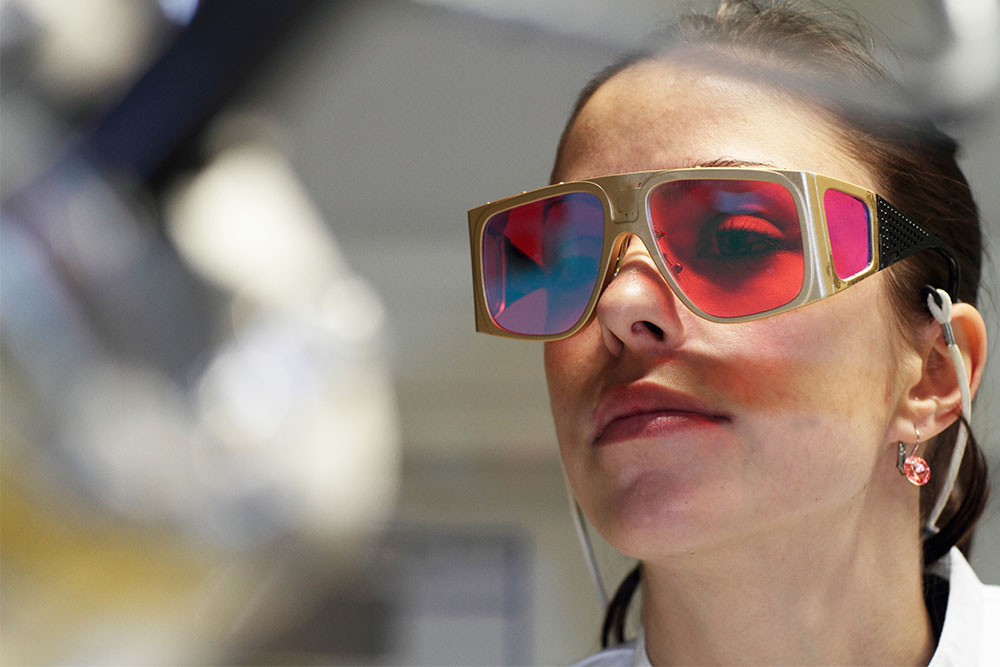
Understanding OD (Optical Density) In Laser Safety Protocols
Quick Summary Optical density ratings determine whether a piece of...
Read more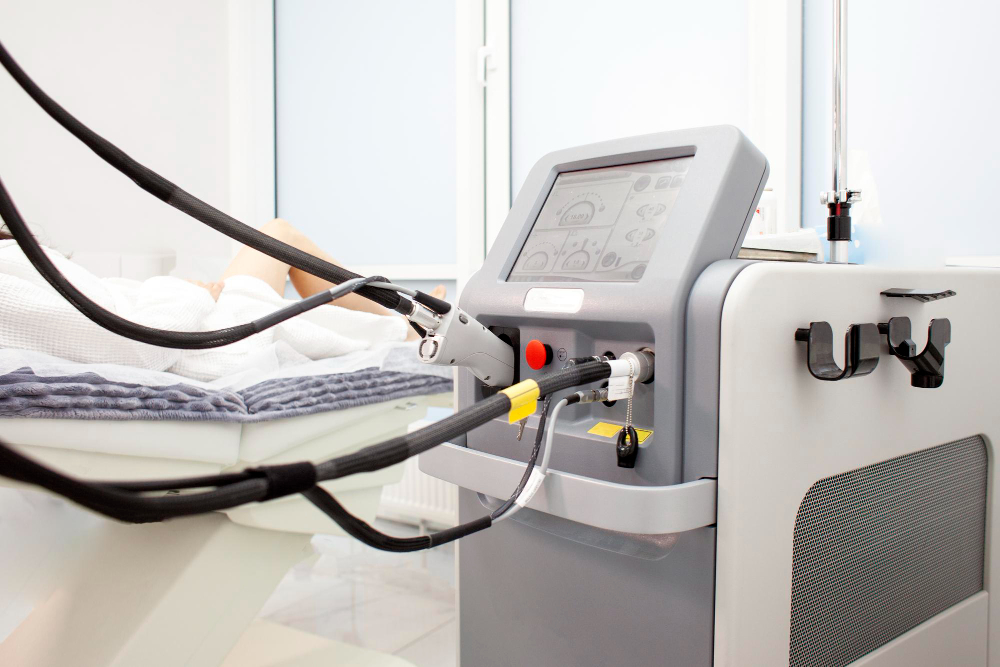
Understanding Long-Pulsed Nd:YAG Laser Technology
Quick Summary Pulse duration significantly influences how a laser ...
Read more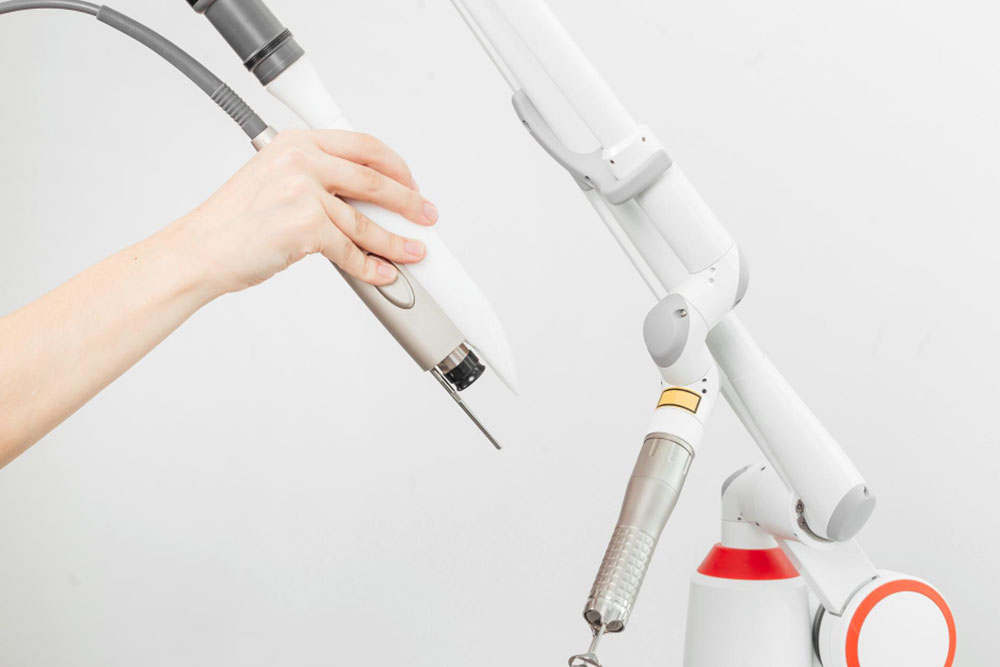
Nd:YAG Lasers Explained: How They Work And Their Practical Uses
Quick Summary This type of laser combines a neodymium-doped crysta...
Read more