High-Energy Pulsed Laser Shutters For Material Processing
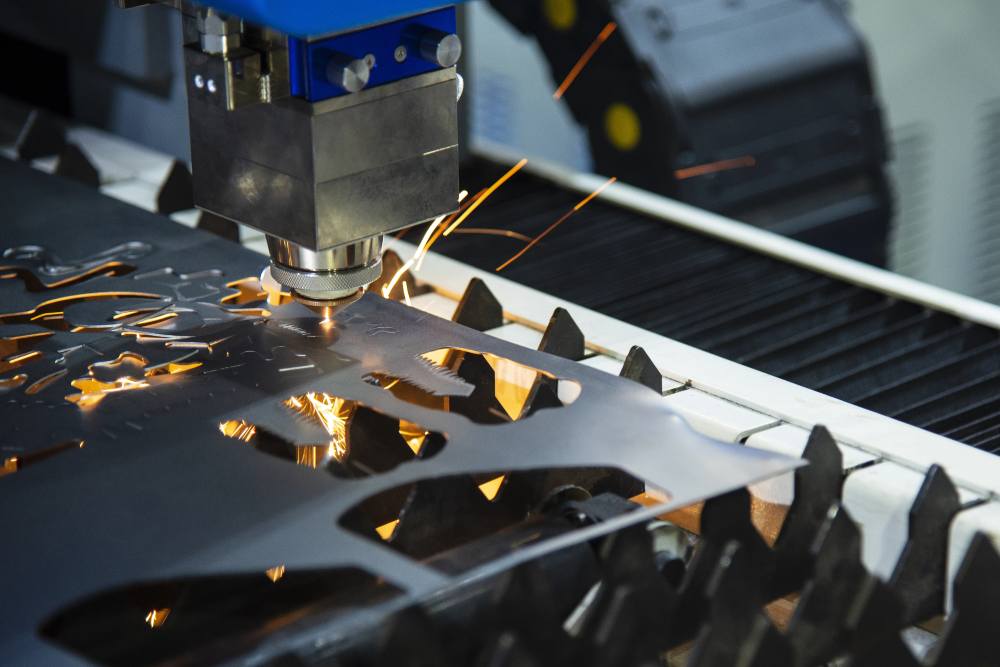
Precision in material processing depends on how accurately a laser system controls energy delivery. A high-energy pulsed laser shutter for material processing matters greatly in that control, managing exposure with speed, precision, and durability.
These shutters control the exact timing of each laser pulse, enabling complex manufacturing and scientific operations to achieve repeatable, clean results. The technology behind them continues to progress, making them indispensable in industries that demand fine detail and reliability.
The Use of Pulsed Laser Shutters in Modern Industry
Laser processing is used in a vast array of applications, from micromachining and drilling to engraving and additive manufacturing. Each requires control over energy distribution at a microscopic scale.
The job of a high-energy pulsed laser shutter is to act as the system’s timing gate, opening and closing within microseconds to manage the duration and frequency of each pulse. This precise control determines how deeply a material is ablated, how smooth the resulting surface appears, and how consistent the process remains over time.
In high-power operations, the shutter must perform under extreme optical and mechanical stress. The materials used for its construction, the coatings on its optical surfaces, and the actuation mechanism all influence how consistently it performs.
The right shutter keeps the beam stable and repeatable. This is necessary for both speed and accuracy in production environments.
Managing Intensity and Accuracy
Each laser pulse carries concentrated energy capable of melting, vaporizing, or modifying materials. The timing of those pulses defines the final outcome. A high-energy pulsed laser shutter for material processing must control exposure duration with extraordinary precision. Even a small deviation can alter the cut depth or affect the finish quality.
Industrial lasers often operate at very high repetition rates. This means the shutter must respond quickly while maintaining mechanical stability. The blade or optical element must open cleanly, close instantly, and return to position without vibration.
The synchronization between laser pulses and shutter operation relies on refined electronics and high-speed actuators. The combination of mechanical and optical precision lets manufacturers shape metals, ceramics, and polymers with controlled repeatability.
Material Processing Advantages
High-energy pulsed systems excel in applications requiring clean edges and minimal thermal distortion. Industries like aerospace, medical device fabrication, and semiconductor manufacturing depend on these capabilities. When combined with efficient shutter operation, they can create detailed features on tough materials without overexposure.
Each pulse interacts with the surface momentarily, allowing controlled energy absorption. The shutter determines how long each pulse lasts and how frequently it repeats. This control helps prevent excessive heat buildup while keeping a steady rate of processing.
Therefore, manufacturers get fine detail and consistent texture while extending the lifespan of the laser’s optical components.
The Connection Between Shutter Design and Laser Performance
The precision of laser shutters and optical beam shutters depends on engineering that balances speed, stability, and endurance. In high-energy environments, this balance becomes more complex. Every part of the shutter (its materials, actuator design, and cooling system) contributes to how well it operates under stress.
A well-designed shutter limits mechanical fatigue, maintains alignment, and avoids contamination of the optical path. Internal coatings and finishes protect against energy absorption and reflective loss.
These engineering decisions impact the overall efficiency of a laser system throughout its lifespan. The shutter is not just an accessory; it is a critical component that directly determines the system’s accuracy.
Progress in Laser Shutter Technology
Modern laser shutter technology has redefined performance standards for pulsed laser systems. Fast-response actuators, low-inertia materials, and advanced coatings allow shutters to operate at higher repetition rates without loss of precision. Compact electronic drivers make integration with digital control systems possible, which will improve synchronization between the shutter and the laser’s pulse sequence.
Thermal management has also improved through new materials and design methods. By distributing or reflecting excess energy, these shutters maintain consistent operation even under demanding duty cycles.
This stability supports industrial use cases that run continuously, such as high-volume cutting or welding lines. The combination of precision timing and mechanical resilience has expanded the possibilities for laser-based manufacturing.
Comparing Continuous and Pulsed Laser Systems
Continuous-wave lasers emit a constant beam, while pulsed lasers release short bursts of energy. Pulsed systems are often preferred for fine detail because each burst delivers concentrated energy for a fraction of a second. A high-energy pulsed laser shutter allows for precise control over those bursts, for greater command over the machining process.
In continuous systems, the shutter may only open or close at long intervals. In pulsed systems, it operates in near-synchrony with the laser, sometimes hundreds or thousands of times per second. This creates different design challenges but also opens opportunities for high-precision control.
The result is better dimensional accuracy, reduced heat distortion, and superior surface quality.
Application Examples from Different Industries
In microelectronics, pulsed lasers are used for drilling vias and cutting thin films. The shutter’s rapid response time determines how precisely each feature is shaped.
In the medical device industry, the technology supports the marking and shaping of instruments where even small imperfections could affect performance. The aerospace industry relies on pulsed lasers to create clean, repeatable cuts in titanium and composite materials. Across all these uses, shutter speed and reliability remain decisive.
Research positions also depend on precise shutter timing. Scientists use pulsed lasers for spectroscopy, ablation studies, and energy transfer experiments. The shutter’s performance directly influences measurement accuracy, making it indispensable for experimental repeatability.
Our Experience with High-Energy Laser Shutters
At NM Laser Products, our experience in designing high-performance shutters spans decades. We know how a high-energy pulsed laser shutter for material processing must perform under the combined stresses of power, speed, and precision.
Our team focuses on developing designs that maintain accuracy across countless cycles while meeting the unique demands of industrial and scientific applications.
Contact us today to learn about our engineering capabilities or to discuss a custom solution customized to your system. Every project benefits from our commitment to quality and precision in optical control.
Related Blogs

Understanding OD (Optical Density) In Laser Safety Protocols
Quick Summary Optical density ratings determine whether a piece of...
Read more
Understanding Long-Pulsed Nd:YAG Laser Technology
Quick Summary Pulse duration significantly influences how a laser ...
Read more
Nd:YAG Lasers Explained: How They Work And Their Practical Uses
Quick Summary This type of laser combines a neodymium-doped crysta...
Read more